
 Posted by
 Explore the sociology of marriage and cohabitation, how social norms are shifting, and what these changes mean for modern relationships and family structures. People do not fall in love in a vacuum. That is something I keep coming back to whenever I think about the sociology of marriage and cohabitation and how dramatically it has shifted over the past several decades. The decision to share a life with someone whether inside a legal marriage or not is never purely personal. It is shaped by economic pressures, cultural expectations, religious traditions, generational attitudes, and a thousand other social forces that most people never stop to consciously examine. I find that fascinating, and honestly a little unsettling, because it means that what we call “love” is partly a product of the society we grew up in.
The sociology of marriage has long been a central subject in sociological research precisely because marriage is one of the oldest and most universal social institutions in human history. And yet, what marriage means, who gets to participate in it, and what purpose it serves has changed enormously over time. In most Western societies today, people marry later than ever before, divorce rates remain relatively high despite some recent declines, and a growing number of couples are choosing cohabitation either as a precursor to marriage or as a long-term alternative to it. Sociologists have been documenting these shifts for years, and the picture they paint is one of profound institutional transformation.
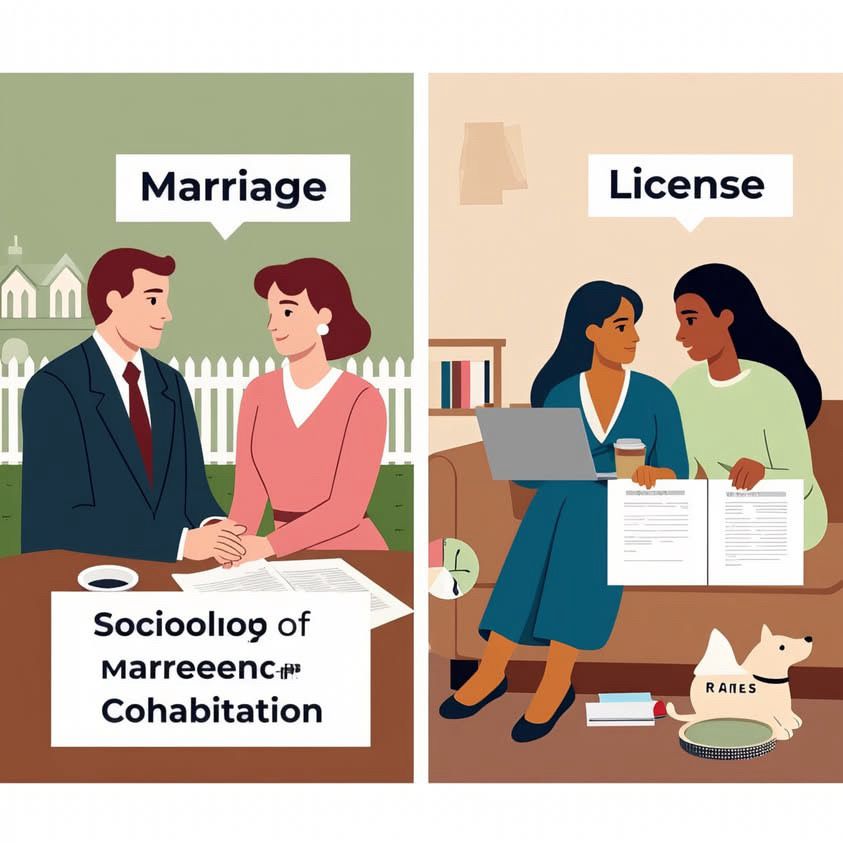
I remember a conversation I had with my grandmother years ago, when she expressed genuine bewilderment at the idea of living with a partner before marriage. For her generation, cohabitation was not simply unconventional it carried a social stigma that could follow a person for years. That stigma was rooted in deeply held moral and religious frameworks that treated marriage as a prerequisite for shared domestic life. The sociology of cohabitation as a serious field of inquiry is relatively recent, in part because cohabitation itself was relatively rare until the 1970s and 1980s, when rates began climbing steeply across the United States, Canada, and much of Europe.
What drove that climb? Sociologists point to several intersecting factors. The women’s liberation movement transformed female labor force participation, giving women genuine economic independence for the first time at scale. That independence fundamentally altered the cost-benefit calculus of marriage. When women depended economically on men, marriage was a financial necessity as much as a romantic one. As that dependency eroded, marriage became more of a choice and choices, unlike necessities, can be deferred, evaluated, and sometimes rejected altogether. The rise of cohabitation as a social norm is in many ways a direct consequence of women’s growing economic autonomy.
At the same time, secularization the broad retreat of religious authority from everyday social life weakened the moral sanctions that had historically discouraged premarital cohabitation. In societies with high rates of religious participation, marriage retains a sacred character that makes alternatives to it feel transgressive. But in increasingly secular societies, that sacred framing has lost much of its force. Researchers studying social norms around marriage and cohabitation consistently find that religiosity remains one of the strongest predictors of whether someone will cohabit before marriage, with highly religious individuals far less likely to do so.
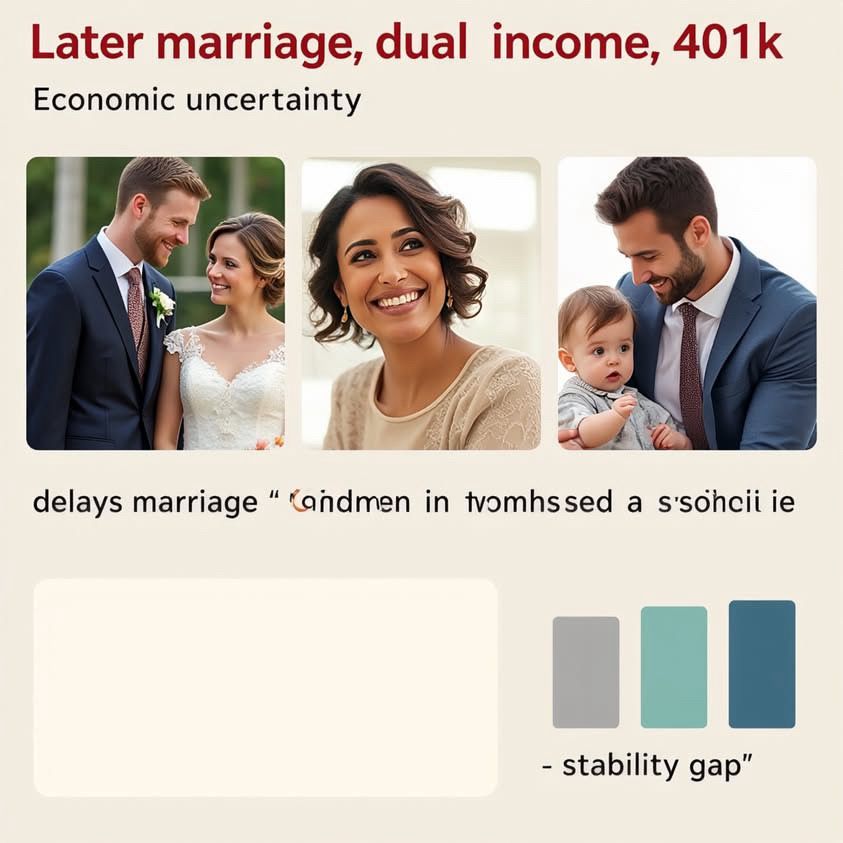
There is an interesting class dimension to all of this as well, and it is one that sociologists have been paying increasing attention to in recent years. Marriage rates in the United States have declined sharply among working-class and lower-income populations, while remaining relatively stable among college-educated, higher-income groups. This pattern, sometimes called the “marriage divide” or “marriage gap,” suggests that marriage has quietly transformed from a near-universal social institution into something that functions more like a status marker a milestone associated with economic stability, career establishment, and upward mobility. For many people navigating precarious economic circumstances, marriage feels like a luxury they cannot yet afford, even when they very much want it.
That finding challenges some popular narratives about marriage decline being primarily a cultural or values-driven phenomenon. The data suggest that structural economic factors stagnant wages, housing costs, student debt, underemployment are doing at least as much work as changing attitudes. Cohabitation has in some respects filled the gap, offering many of the practical and emotional benefits of partnership without the formal legal and financial entanglements that marriage brings. For couples living paycheck to paycheck, that flexibility can feel less like a moral compromise and more like a rational strategy.
The sociology of family structure has had to grapple with what all of this means for children and for the long-term stability of intimate relationships. Research on this front is genuinely complicated and has often been politically charged. Studies have generally found that children raised by married biological parents tend to have better outcomes on a range of measures, though sociologists are careful to note that this correlation is heavily confounded by socioeconomic status married couples with children tend to have higher incomes, more education, and more stable housing, all of which independently predict better child outcomes. Disentangling the effects of marriage itself from these related advantages is extraordinarily difficult.
References
Cherlin, A. J. (2010). Demographic trends in the United States: A review of research in the 2000s. Journal of Marriage and Family, 72(3), 403–419. https://doi.org/10.1111/j.1741-3737.2010.00710.x.
Manning, W. D. (2020). Young adulthood relationships in an era of uncertainty: A case for cohabitation. Demography, 57(3), 799–819. https://doi.org/10.1007/s13524-020-00885-7