
 Posted by
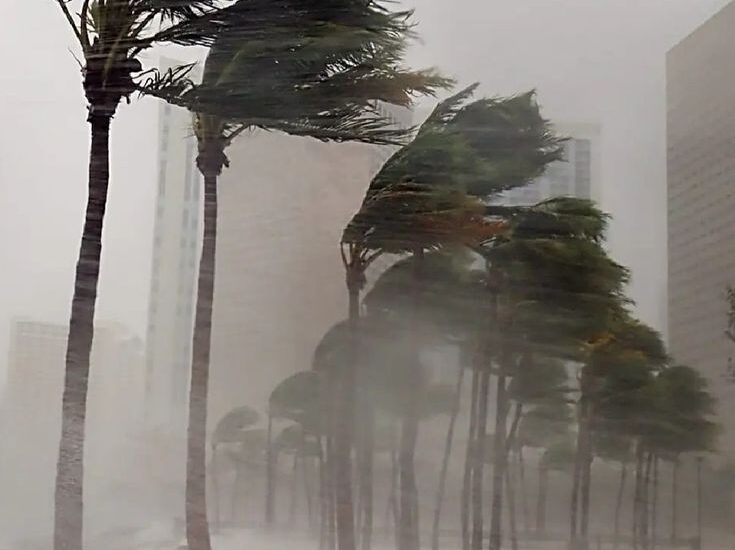
 I will be honest with you. For most of my life, when I pictured a disaster, I only saw the big, dramatic stuff. You know what I am talking about. The crack of lightning. The ground is shaking. A wave of water is swallowing a coastline. We are all trained to measure these moments by wind speed or how many Richter scale points they rack up. But here is the thing I have learned after digging into this topic: that framing misses the entire point of the story.
It is like judging a movie only by its loudest explosion. Let me rewind. A few years ago, I started reading about disaster sociology, and it completely flipped my perspective. The core argument is simple, yet it will haunt you if you think about it too long. Disasters are not really “natural” events.
I know, that sounds crazy when a 9.0 magnitude earthquake is literally tearing a city apart. The earthquake is real. I am not denying physics. But who suffers? How badly do they suffer? And why does it take one neighborhood a few months to rebuild while another neighborhood, just five miles away, is still a wreck a decade later?
Those answers are not found in the sky or on the ground. They are found in social structures that were built and broken decades before the first raindrop fell, or the first tremor hit. The field of disaster sociology reveals that our social safety nets often determine survival more than the storm itself, and if you want to understand modern risk, you have to look at poverty rates, not just radar maps.
There is a specific word that defines this entire field: vulnerability. I remember reading about a sociologist named Enrico Quarantelli from the University of Delaware’s Disaster Research Center. He argued that your risk has very little to do with how close you live to a fault line. Instead, it is about the accumulated weight of poverty, systemic discrimination, and roads that were already crumbling before the crisis hit.
Let me give you the classic example because it is too important to skip. Hurricane Katrina. Everyone saw the storm. But sociologists looked at the aftermath. Why did the Lower Ninth Ward in New Orleans get turned into a lake while other areas stayed dry? It was not a random chance. It was not just the levee breaking.
That neighborhood was predominantly Black and low-income. The recovery process for wealthier, whiter neighborhoods moved at a normal speed. For the Lower Ninth Ward? It stretched on for years. Years. That disparity was not an accident of geography. It was a reflection of who society decides to protect before the rain even starts.
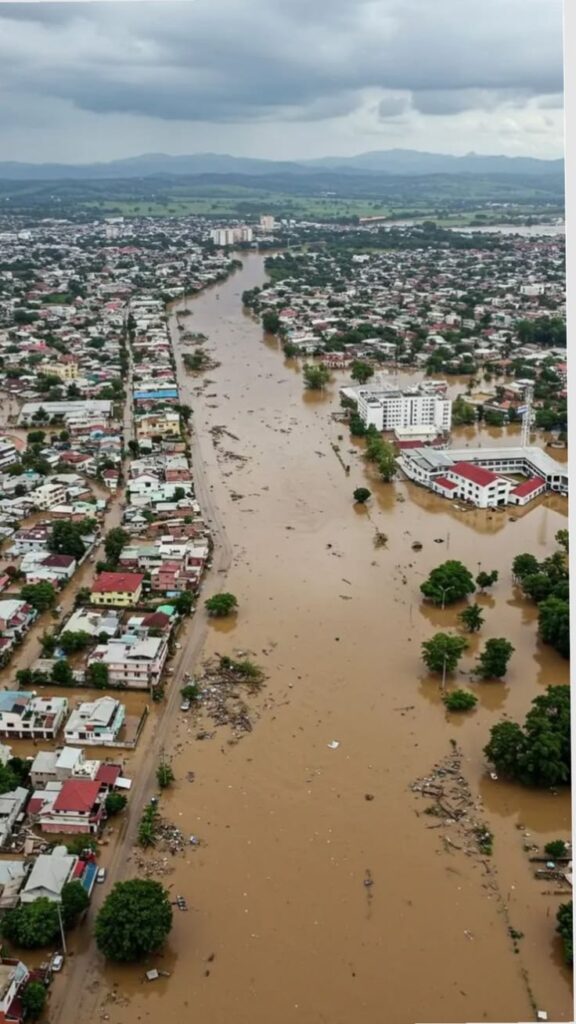
This is the part that really gets under my skin. Have you ever noticed that after a big fire or a flood, the place never quite looks the same for the people who actually lived there? Disaster sociology does not just look at the immediate rescue. It looks at the exploitation of crisis moments.
You might have heard of Naomi Klein. She wrote about this in a different context, but the idea fits perfectly here. Powerful interests often use the chaos of a disaster to push through policies that serve the wealthy, not the families sleeping in shelters. Research keeps showing that post-disaster reconstruction tends to accelerate gentrification.
The government buys up damaged properties. Developers smell profit. New condos go up. And the original residents, the very people who needed recovery resources the most, got pushed out because they cannot afford to come back. Does that sound like recovery to you? It does not to me.
I do not want to be totally depressed here. There is a silver lining, even if it is a small one. The smart folks at the Federal Emergency Management Agency (FEMA) have started to catch on. They are now incorporating social vulnerability indices into their planning models. What does that jargon mean? It means they are finally realizing that effective disaster response is not just about dropping off water bottles.
It is about knowing which populations face compounded risks before the emergency even starts. Look at the CDC’s Social Vulnerability Index. It maps communities based on things like access to a car, housing quality, and poverty rates. Why? Because those boring, everyday factors predict disaster outcomes better than any wind gauge ever could.
So, what is the takeaway here? The earthquake or the hurricane is merely the opening scene. The real plot, the pain, the inequality, and the recovery are all driven by the social structure we built long before the alarm went off. I guess I am just asking you to look past the lightning next time. The real story is always on the ground, not in the sky.
References
Quarantelli, E. L. (1998). What Is a Disaster? Perspectives on the Question. Routledge.
Federal Emergency Management Agency. (2023). National Risk Index. FEMA.
Centers for Disease Control and Prevention. (2023). CDC/ATSDR Social Vulnerability Index. CDC.
Tierney, K. (2014). The Social Roots of Risk: Producing Disasters, Promoting Resilience. Stanford University Press.