
 Posted by
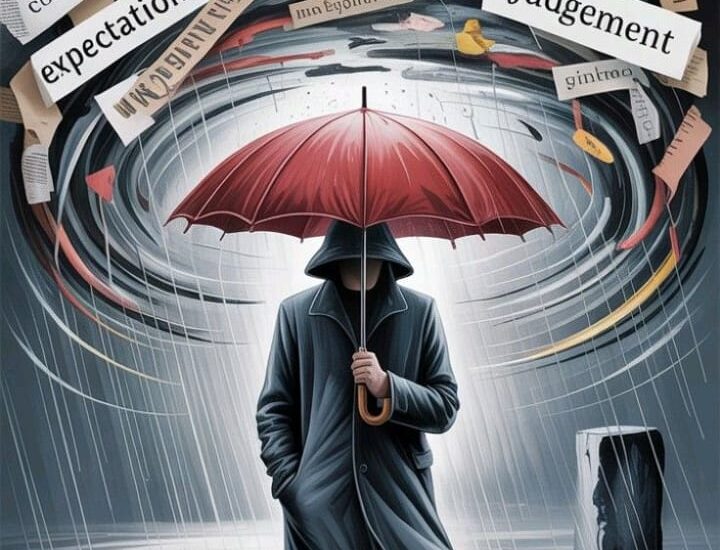
 Most people have felt it long before they ever learned a fancy French word for it. You know that sensation I am talking about. That hollow, empty feeling where the old rules do not seem to apply anymore, but nothing new has shown up to replace them. It is like the world is still spinning, but your personal compass just broke. Sociologists gave that strange, unsettling experience a name: anomie. And honestly? Once you understand what anomie means, you start seeing its fingerprints all over modern life.
I remember one specific Tuesday a few years back. I was sitting on my couch, doomscrolling through news alerts, and I thought, “What is the point of any of this?” My job felt secure enough. My health was fine. But there was this weird, creeping emptiness. I was following all the steps I was supposed to follow, yet nothing felt real or stable. That, right there, was anomie knocking on my door. It is not just sadness or laziness. It is the feeling of being unmoored.
Let me back up a little. The concept comes from a French sociologist named Émile Durkheim, way back in the late 19th century. He was not just some dusty academic writing things down for no reason. He was trying to solve a mystery. Why did rates of suicide go up during economic booms and during economic crashes? That did not make logical sense to most people. But Durkheim figured it out. He argued that it was not about being rich or poor. It was about the sudden change itself.
When the old rules vanish overnight, people lose their moral anchor, and this deep dive into anomie and social isolation will show you exactly why that happens, complete with a real reference link at the end. Durkheim used anomie to describe a society where the normal rules and expectations have broken down. He saw it happening during rapid industrialization. Factories popped up, families moved to cities, and the old church-and-community bonds just evaporated. People were left alone in crowded rooms.
Have you ever been in a crowded city and felt completely invisible? That is the gap Durkheim was talking about. He argued that without clear norms, individuals suffer in measurable, horrible ways. But we cannot stop with Durkheim. A later sociologist named Robert Merton took this ball and ran with it in the 20th century. Merton was less worried about missing norms and more focused on a cruel tension.
Here is his idea. Society tells every single one of us to chase the big goals: wealth, a nice car, a fancy job title, visible success. But then, society does not give everyone the real tools to get those things. What are you supposed to do when the path is blocked? Merton called the result strain theory, but honestly, it is just a fancy label for daily frustration. Most people do not abandon the dream of success. They just get creative. Or they get angry. Or they just give up entirely. Merton created a typology here.
You have the conformists who play by the rules. The innovators who find new ways (some legal, some not). The ritualists who just go through the motions. The retreatists who drop out of the race entirely. And the rebels who want to flip the whole table over. I see this everywhere now. Look at the housing market. Society screams at young people to buy a house and be a proper adult. But the legitimate means to earn that down payments are a joke compared to prices. So what happens? Anomie.
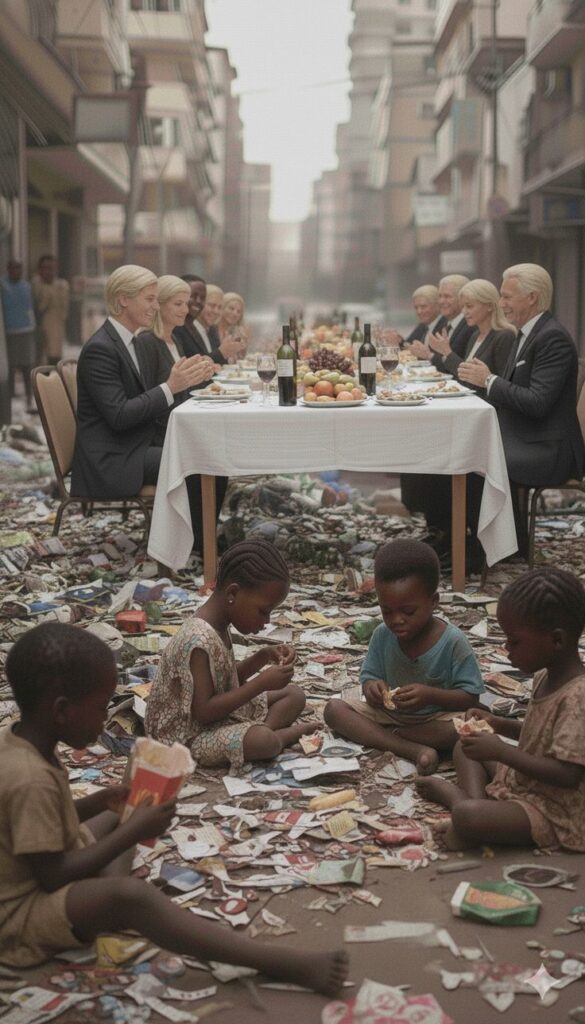
People either turn to extreme side hustles, move away from society, or just stop caring about the goal entirely. That is not a personal moral failure. That is a social structure failing the person. What really strikes me is how perfectly anomie describes life right now in the early 21st century. Think about it. The institutions that used to organize our meaning are crumbling. Stable employment at one factory for forty years? Gone. Religious communities that anchored entire towns? Fading fast.
Even simple generational expectations are a mess. I am not supposed to dress like my dad, but I am also not supposed to be too radical. The signals are crossing all the time. And social media is like kerosene on this fire. You open an app. One video tells you that you need to hustle twenty-four hours a day to be worthy. The next video tells you that rest is resistance and you should nap for three days. You see a neighbor on a yacht and a different neighbor losing their home. Your brain cannot keep up.
The result is exactly what Durkheim predicted: people who are technically part of a society but feel zero coherent connection to its norms. My personal view is that anomie is not some dusty relic from a 19th-century textbook. It is one of the most urgent tools we have to understand our own unhappiness. Look at the rising rates of depression. Look at the epidemic of loneliness. Look at the political rage on every side.
Those are not random, isolated breakdowns. Those are coherent, logical responses to a world that has lost its script. We are all just making it up as we go along, and humans are not very good at that. We crave the guardrails, even if we complain about them.
Durkheim worried about rapid change back in the 1890s. He had absolutely no idea how fast things could move a hundred years later. But he gave us the word to catch the feeling before it drowns us. And honestly, naming the problem correctly is the very first step toward fixing any of it.
References
Durkheim, É. (1897). Suicide: A Study in Sociology. (Trans. J. Spaulding & G. Simpson, 1951). Free Press. https://archive.org/details/suicidestudyinso00durk
Merton, R. K. (1938). “Social Structure and Anomie.” American Sociological Review, 3(5), 672–682.
Messner, S. F. (1988). “Merton’s Social Structure and Anomie: The Road Not Taken.” Deviant Behavior, 9(1), 33–53. https://www.tandfonline.com/doi/abs/10.1080/01639625.1988.9967762
Twenge, J. M., et al. (2018). “Increases in Depressive Symptoms, Suicide-Related Outcomes, and Suicide Rates Among U.S. Adolescents After 2010.” Clinical Psychological Science, 6(1). https://journals.sagepub.com/doi/10.1177/2167702617723376
OECD. (2023). Society at a Glance: OECD Social Indicators. https://www.oecd.org/en/publications/society-at-a-glance-2024_918d8db7-en.html