
 Posted by
 I used to believe that colonialism was a closed case. You know the version of history I am talking about. It is the one that treats the empire like a bad chapter in a textbook. Something that happened, caused a lot of pain, and then wrapped up nicely when countries started getting their independence. But is that really true? I cannot defend that framing anymore.
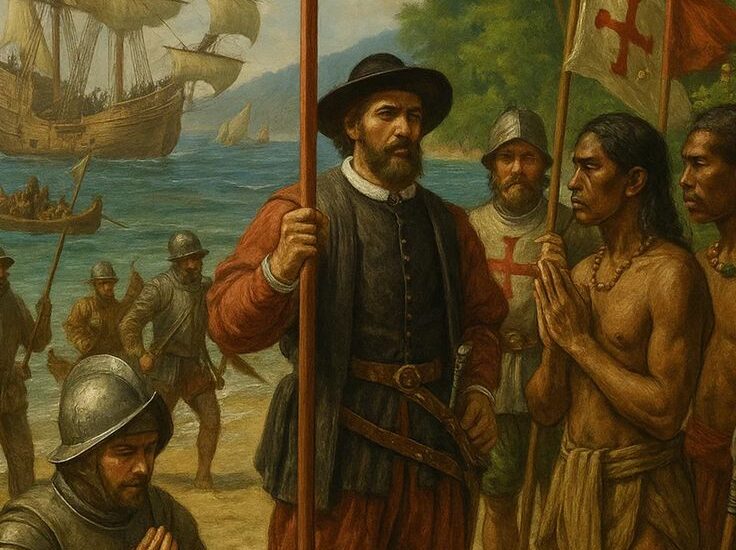
Not when I look at how race relations actually work in formerly colonized countries. Not even in the nations that did the colonizing. The chapter did not close. It just stopped being labeled. Here is what took me a long time to understand. Colonialism did not simply exploit racial categories that already existed. It created them from scratch. European powers needed a justification for all that land seizure, all that enslavement, all that cultural destruction.
And race provided that perfect excuse. I remember reading the work of a scholar named Anibal Quijano, who wrote about something he called the “coloniality of power.” His idea was simple but brutal. The racial hierarchies invented to serve colonial purposes did not dissolve when colonial administrations formally ended. They just embedded themselves into law, education, economics, and even the way we imagine each other socially.
Let me give you a personal reflection. I grew up hearing people say things like “why are some countries still poor?” or “why do certain groups always seem to be at a disadvantage?” And the answers always felt incomplete. People would blame bad governance, or corruption, or lack of effort. But that never sat right with me. Something was missing.
Then I started digging into the economic legacy of colonialism. And I mean really digging. I remember sitting in a high school history class, thinking colonialism was something that ended with faded maps and old treaties, but the more I learn about modern race relations, the clearer it becomes that the system just evolved. For example, there is research by a woman named Utsa Patnaik that floored me.
Using British trade data, she estimated that Britain extracted roughly forty five trillion dollars from India between 1765 and 1938. Forty five trillion. That is not a historical curiosity. That kind of figure explains infrastructure gaps. It explains educational disparities. It explains health outcomes that persist today in places like India, Nigeria, and Jamaica. Poverty that looks like a present day failure is often just colonial inheritance wearing a modern mask.
I do not think people realize how massive that wealth transfer was. We are not talking about a little bit of gold or spices. We are talking about the systematic draining of entire economies so that European nations could build their railroads, their banks, and their universities. And when independence finally came, what was left? Broken systems, artificial borders, and economies designed to serve someone else. That is not a real ending. That is a rebrand.
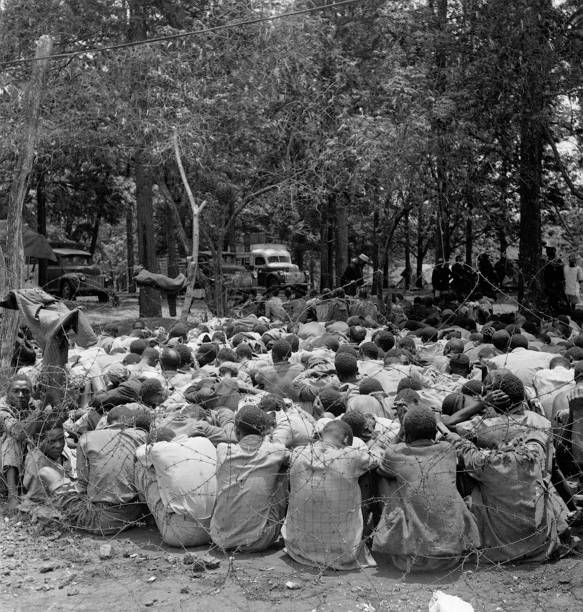
But here is where it gets even deeper for me. The psychological dimensions of colonialism matter just as much as the economic ones. Have you ever read Frantz Fanon? His book The Wretched of the Earth changed how I see everything. Fanon wrote about how colonialism operates on the interior life of colonized people. It produces shame, self doubt, and a fractured relationship with cultural identity.
I have seen this in my own family, honestly. The way older generations would sometimes reject their own language or traditions because they were taught that those things were inferior. Those wounds do not just disappear. They move through generations. They shape how communities see themselves and how institutions see them in return.
You might be asking yourself, why does any of this matter today? Here is my honest position. The connection between colonialism and contemporary race relations is not speculative. It is not contested. It is well documented, structurally evident, and morally significant. Treating modern racial inequality as a separate problem from its colonial origins is not just historically incomplete. It makes it nearly impossible to address the problem effectively because you are treating symptoms rather than causes.
I am not saying individuals alive today should walk around feeling guilty. That is not helpful. Understanding colonialism is about accurately diagnosing how the world got to where it is. Think of it like a doctor trying to treat a chronic illness. If you do not know the origin, you cannot fix the damage. That diagnosis is the only honest starting point for better policies, better education, and better race relations.
So no, colonialism did not end. It just changed forms. It shows up in who has access to capital. It shows up in which histories get taught in schools. It shows up in the way a young person from a formerly colonized country might still feel the weight of that old hierarchy without even knowing its name. And naming it? That is the first step toward something better.
References
Quijano, A. (2000). “Coloniality of Power, Eurocentrism, and Latin America.” Nepantla: Views from South, 1(3), 533–580. https://www.jstor.org/stable/23250266
Patnaik, U. (2018). “Revisiting the drain, or transfer from India to Britain in the context of global diffusion of capitalism.” In Agrarian and Other Histories. Tulika Books. https://www.researchgate.net/publication/325387657
Fanon, F. (1961). The Wretched of the Earth. Grove Press. https://archive.org/details/wretchedofearth00fano
Rodney, W. (1972). How Europe Underdeveloped Africa. Bogle-L’Ouverture Publications. https://archive.org/details/walter-rodney-how-europe-underdeveloped-africa-1972
United Nations. (2021). Report of the Special Rapporteur on Contemporary Forms of Racism. https://www.ohchr.org/en/special-procedures/sr-racism