
 Posted by
I used to believe my taste was mine alone. Truly. Then I fell down a rabbit hole of reading about the sociology of fashion, and honestly, the view from the bottom is a little unsettling. Fashion and beauty are not just about looking good. They are social systems that sort us, quietly and efficiently, by status. We do ourselves a favor when we finally admit it.
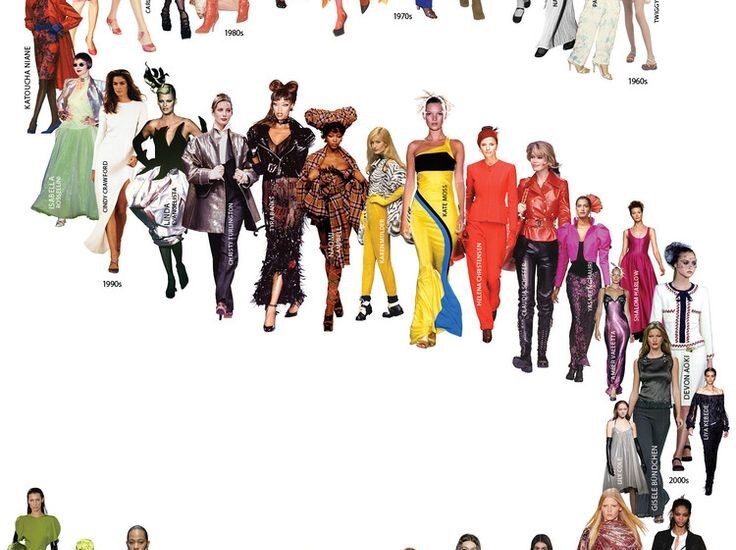
This post explores how fashion and beauty function as social systems that sort people by status, revealing why our seemingly personal taste is shaped by cultural capital and gendered beauty standards. Georg Simmel saw this over a century ago. His big idea was that fashion does two jobs at once. It lets us fit in with a group, and it lets that group stand apart from everyone else.
Rüling explains that the link between fashion and class differences is probably the most prominent part of Simmel’s theory . Higher classes set a style, lower classes copy it, and then the higher classes move on to something new. Think about how quickly a trend dies once everyone owns it. That is not random. That is the system working. Pierre Bourdieu pushed the idea further. In his view, taste is a form of cultural capital, something that earns respect and advantage without a price tag attached .
Quemin and Lévy point out that his study of the couturier and the designer label offered a striking illustration of his concept of the field, and that it shifted attention away from consumption alone . Fashion, in this view, is also about who produces and legitimizes what counts as fashionable. So who decides what is chic? I think a fairly small circle of insiders. Beauty follows the same logic, only with higher stakes.
Kwan and Trautner review research showing that physical attractiveness is associated with a number of positive outcomes, while unattractive individuals are subject to stigma, stereotyping, and discrimination . They argue that the effort people put into their looks, which they call beauty work, ends up reproducing a social system that privileges youth and attractiveness . I find that unsettling, because the effort feels voluntary. A skincare shelf feels like self-care, yet it may also be a response to pressure.
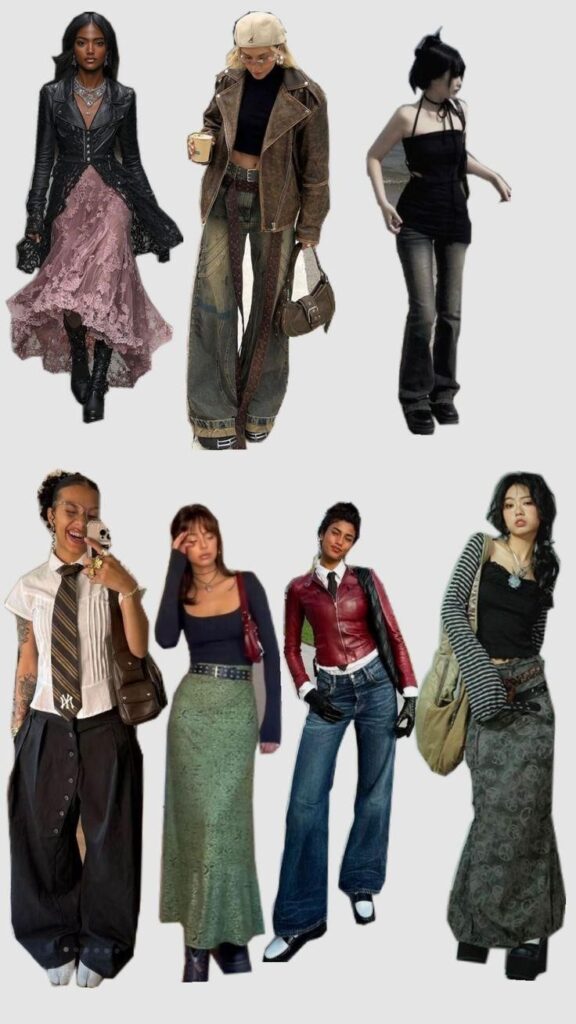
That pressure is not spread evenly, either. Sarpila, Brans, and Kuipers discuss how beauty standards, beauty practices, and the social norms around them are gendered, and how appearance connects to inequalities of gender and beyond . Women often carry more of the cost. Men are not exempt, but in my experience the expectations placed on them tend to be lighter and more forgiving. Now, I do not want to sound like a killjoy. Fashion is fun.
Dressing up can be creative, expressive, even rebellious, and plenty of people use style to push back against the very norms I am describing. I enjoy a good outfit as much as anyone. My point is only that enjoyment and critique can live in the same closet. So what should a thoughtful reader do? I would say notice the cycle. Ask who benefits when a look suddenly becomes necessary. Ask why a certain body or age is treated as the default.
You do not have to give up fashion or beauty routines. You just have to see them for what they are, a social language that speaks about class, power, and belonging long before it says anything about your personal taste. Taste feels private, but it is learned, shared, and ranked. Once you see that, getting dressed in the morning starts to look a little different. Awareness is not the end of style. It is just a better way to wear it. I think about this whenever a new aesthetic takes over my feed. Suddenly everyone owns the same bag, the same shoe, the same shade of blush.
For a while it feels fresh. Then it feels everywhere. Then it feels tired. I used to blame myself for being fickle, for chasing trends I swore I would never chase. Now I see it as a cycle I was never outside of. The fashion industry does not just sell clothes. It sells belonging, and belonging always comes with a queue. Someone is always ahead, and someone is always catching up. Here is what changed for me. I stopped treating my taste as a personality trait and started treating it as a conversation.
I ask better questions now. Do I actually like this, or do I like the version of myself it promises? Would I wear this if no one saw me? Sometimes the answer is yes, and I wear the thing and enjoy it. Sometimes the answer is no, and I put it back. That small pause is where freedom lives, I think. The sociology of fashion and beauty does not demand that we opt out. It just asks us to notice the game while we are playing it, and maybe to play a little more on our own terms.
References
Kwan, S., & Trautner, M. N. (2009). Beauty work: Individual and institutional rewards, the reproduction of gender, and questions of agency. Sociology Compass, 3(1), 49–71. https://www.acsu.buffalo.edu/~trautner/Kwan_Trautner_Soc_Compass.pdf
Quemin, A., & Lévy, C. (2011). Pour une sociologie de la mode et du vêtement. Sociologie et sociétés, 43(1). https://doi.org/10.7202/1003529ar
Rüling, C.-C. (2000). Theories of (management?) fashion: The contributions of Veblen, Simmel, Blumer, and Bourdieu (Cahiers de recherche 2000.01). Université de Genève. https://archive-ouverte.unige.ch/unige:5868
Sarpila, O., Brans, L., & Kuipers, G. (2026). Beauty as gendered inequality. In G. Kuipers & O. Sarpila (Eds.), Handbook of beauty and inequality. Springer. https://www.utupub.fi/items/201d03fb-20b5-4424-a699-14d0a470bba5/full