
 Posted by
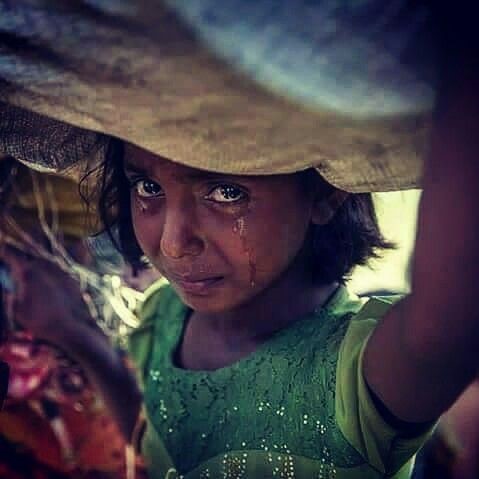
Some topics resist a casual voice, and I will admit this one pushed back hard as I tried to write it. But I believe plain language matters here, so I will keep things direct. My position is simple. Gender-based violence is not some unfortunate side effect of displacement. It sits at the very center of the danger and our collective response has been far too slow and far too weakly supported by hard evidence.
Let me start with the scale of the problem, because the numbers deserve attention. A 2024 systematic review and meta-analysis published in BMC Public Health pooled seventeen studies covering 6,161 refugee and internally displaced women across Africa. The estimated prevalence of gender-based violence came out at 48.2 percent. Sit with that for a moment. Almost half of the women studied were survivors (Tadesse et al., 2024).
The same review found that younger women, women who used alcohol, and women without social protection faced higher risk. Those risk factors tell us something crucial. Violence is not random. It follows the gaps in protection, and those gaps are where we should focus our attention. This analysis of gender-based violence in refugee and asylum-seeking populations examines prevalence data, prevention gaps, and the urgent need for evidence-based protection programs.
Displacement creates those gaps in painful and predictable ways. People flee conflict, lose their homes, lose their networks, and then wait in crowded camps or uncertain systems where safety is never guaranteed. Violence can happen before flight, during the journey, and after arrival, sometimes at the hands of several different perpetrators. And the harm does not stay in the past. Survivors carry physical injury, trauma and social isolation for years afterward. I think about that often. A woman who reaches safety has not necessarily reached the end of her ordeal.
Here is the part that bothers me most. We know the problem is enormous, yet we know surprisingly little about what actually works to stop it. A systematic review of prevention and management strategies in refugee settings searched twelve databases and found that none of the screened studies met the criteria for evaluating responses on actual displaced populations. The authors called for research that tests which responses really work, so the field can move from expert opinion toward evidence (Asgary et al., 2013).
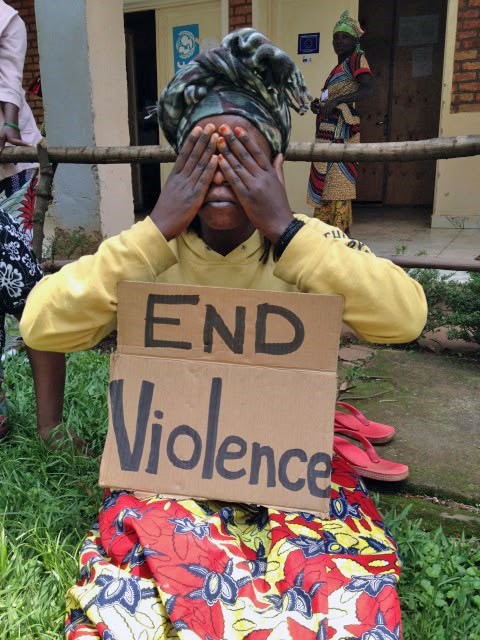
That review is older now, and I would love to see newer work fill the gap, but the point still stands. Good intentions are not the same as proven programs. Have we really accepted that after all these years? There is, however, real guidance available for those willing to use it. The UN refugee agency revised its guidelines in 2003 to cover more than rape, adding trafficking, domestic violence, female genital mutilation and demands for sexual favors in exchange for aid.
The agency also urged that refugees take a central role in designing and running prevention programs (UNHCR, 2003). I strongly agree with that principle. Survivors and their communities understand the danger better than any outside planner does, and programs built without them tend to miss the mark entirely. It seems obvious when you say it out loud, and yet the practice lags behind the principle.
So what should we actually do? My view is that we should do three things, and I will keep them plain. First, fund evaluation, so every response can be tested and improved rather than repeated on faith. Second, build asylum systems that recognize gender-based violence as serious harm instead of treating survivors with suspicion. Third, protect people early, with lighting, safe housing and reliable reporting channels, rather than waiting for injury to prove the need.
None of this is easy, and I do not pretend otherwise. But numbers like 48 percent should not be met with shrugging. They should change budgets and priorities. If you work in this area or simply care about it, please share this article and keep asking what the evidence says. That question, asked often enough, is how pressure builds. I will close with something I keep coming back to. The gap between what we know and what we do is not really a knowledge problem anymore.
We have prevalence data. We have guidance. We have decades of survivors telling us where the system failed them. What we lack is the will to treat gender-based violence in refugee and asylum-seeking populations as the emergency it plainly is. So I will keep writing about it, and I hope you will keep reading, sharing and pushing for better. That is how this changes.
References
Asgary, R., Emery, E., & Wong, M. (2013). Systematic review of prevention and management strategies for the consequences of gender-based violence in refugee settings. International Health, 5(2), 85–91. https://hsrc.himmelfarb.gwu.edu/sphhs_global_facpubs/599
Tadesse, G., Andualem, F., Rtbey, G., et al. (2024, October). Gender-based violence and its determinants among refugees and internally displaced women in Africa: Systematic review and meta-analysis. BMC Public Health. https://doaj.org/article/173fb1003e8a4ca780a00d8678a68eec
UNHCR. (2003, September 19). UNHCR offers revised guidelines to combat violence against refugee women. https://www.unhcr.org/node/12627