
 Posted by
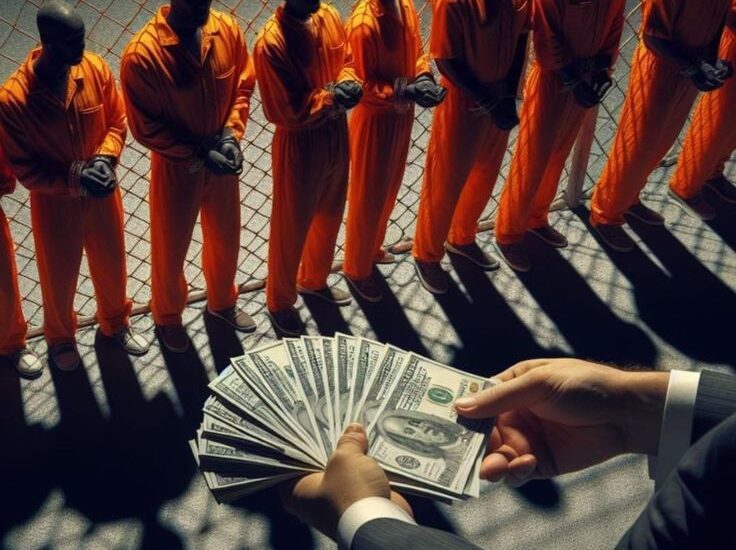
I have heard the phrase “equal justice under law” so many times that it almost sounds like background noise. Then I look at the data on who sits in jail waiting for trial, and the phrase starts to feel more like a slogan than a description. My opinion is blunt: money decides too much in the American criminal justice system, and the clearest proof is the cash bail system.
Consider who actually ends up in local jails. Analysts at the Prison Policy Initiative, using Bureau of Justice Statistics data, found that people in jail had a median annual income of $15,109 before incarceration, which is less than half, 48 percent, of the median for non-incarcerated people of similar ages. Black men in jail had a pre-incarceration median income 64 percent lower than that of their non-incarcerated counterparts (Rabuy & Kopf, 2016).
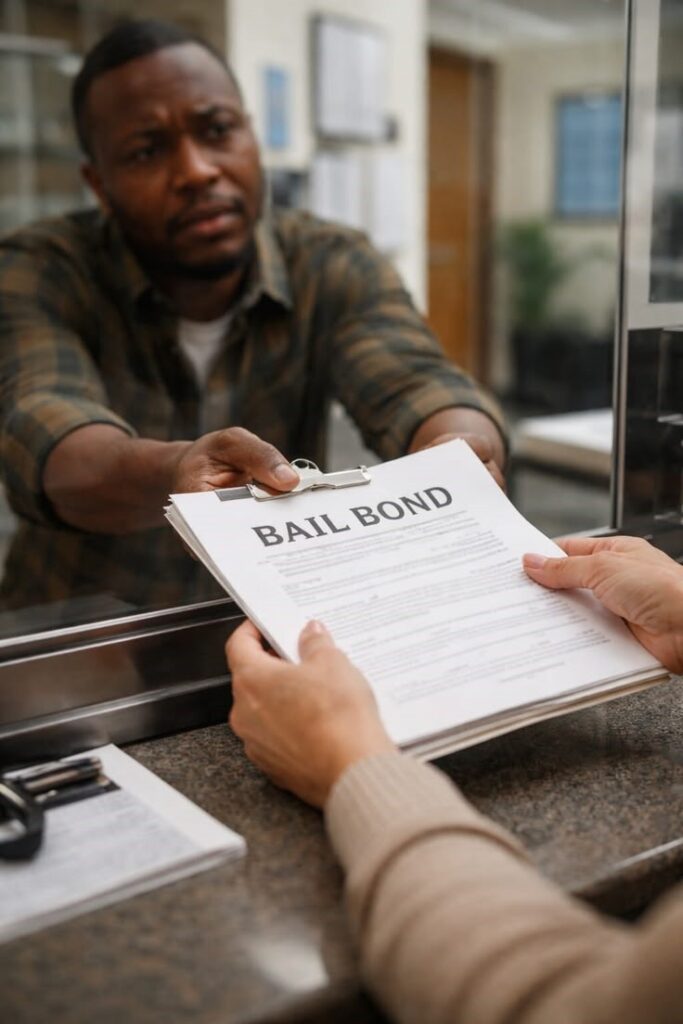
The same report noted that the median felony bail of $10,000 equals about eight months of income for a typical detained defendant. Think about that. A person could be legally innocent and still stuck behind bars because eight months of pay is not sitting in a bank account. How can we claim to have equal justice when a person’s freedom before trial depends entirely on their bank balance?
Some people respond that bail simply protects public safety. I understand the concern, and public safety matters. But if bail amounts mostly sort people by wealth rather than by danger, then the system is measuring the wrong thing. A defendant who can pay goes home to work and prepare a defense. A defendant who cannot pay waits in a cell, possibly losing a job, housing and custody arrangements in the meantime. I have seen this play out in my own community, watching families struggle to scrape together bail money while their loved one sits in jail, unable to work or care for children.
The wealth inequality baked into this system should trouble anyone who believes in fairness. The damage does not stop at the jail door. Economist Megan Stevenson studied criminal cases in Philadelphia and found that socioeconomic gaps in pretrial detention ripple outward into case outcomes, including sentencing. When researchers accounted for detention status, the race and income gaps in sentences shrank (Stevenson, 2016).
In plain terms, being locked up before trial can change what happens at the end of the case. Pressure to accept a plea deal grows when every extra week costs you your livelihood. Understanding how wealth inequality and socioeconomic disparities shape outcomes in the criminal justice system requires examining every stage of the process, from arrest to sentencing, and recognizing that the cash bail system often determines who walks free and who stays locked up before trial.
This reality should make us question whether we are truly delivering justice or simply managing poverty. What should we do about bail reform? I lean toward a presumption of release, which means judges release people by default and prosecutors must give a real reason to hold someone. One law school analysis proposes exactly this kind of middle path, giving courts discretion while preventing cash bail from becoming the automatic answer for almost every offense (Bhimani, n.d.).
I like it because it respects both fairness and safety. It does not ban judgment. It simply refuses to let a bank balance stand in for judgment. Does that not sound like a more reasonable approach than what we have now? Public defense funding deserves attention too, because release is only one piece of the puzzle. A defendant with a rushed lawyer and a heavy caseload faces a different system than one with a well-paid legal team. If we care about fairness, we need to care about resources on both sides of the courtroom.
I think about the public defenders I have met over the years, dedicated people stretched so thin they can barely remember their clients’ names. That is not justice either. I know reform is politically messy. People have strong opinions about crime and punishment, and those opinions often clash. Still, I would rather argue about better solutions than defend a system that jails people for being poor.
The socioeconomic divide in our criminal justice system is not accidental. It is built into the structure of how we handle pretrial detention and cash bail. If this topic interests you, read the sources below and ask your local officials what bail looks like in your community. Change starts with awareness, and awareness starts with asking hard questions about who our system actually serves.
I have spent a lot of time thinking about why this issue does not get more attention. Part of the problem is that people who end up in jail before trial are easy to ignore. They are not a powerful voting bloc. They do not have lobbyists. They are often invisible to those of us who have never had to post bail or sit in a holding cell wondering when someone will come up with the money. But invisibility does not make the problem less real. It just makes it easier to pretend the problem does not exist.
What strikes me most is how normalized all of this has become. We treat cash bail like a natural feature of the landscape, something that has always been there and always will be. But it is a policy choice. Other countries do not organize their pretrial systems this way. Even within the United States, some jurisdictions have moved toward releasing people based on risk rather than resources. Those places are not falling apart. Crime did not spike.
The sky did not fall. What changed was that fewer people lost their jobs and their housing and their kids while waiting for a trial that had not even started yet. I also think about the ripple effects that never show up in the statistics. A parent who misses work because they cannot make bail might lose that job permanently. A tenant who sits in jail for weeks might come home to an eviction notice.
A young person who spends a month behind bars before being cleared might carry that experience for the rest of their life, not because they did anything wrong but because they could not afford to get out. These are not abstract harms. They are real, and they compound over time. Maybe the hardest part is that the solutions are not mysterious. We know what works. We know that presumptive release with real judicial oversight keeps communities safe.
We know that adequately funded public defense makes a difference. We know that pretrial services and supervision programs can help people show up for court without locking them up first. The question is not whether we can fix this. The question is whether we have the will to try. I will keep writing about this and talking about it and pushing for answers from the people who represent me. I hope you will do the same. The criminal justice system belongs to all of us, and so does the responsibility to make it fair.
References
Bhimani, A. (n.d.). Socioeconomic status and its implication on criminal justice: Bail reform. Cornell Journal of Law and Public Policy. https://publications.lawschool.cornell.edu/jlpp/?p=3857
Rabuy, B., & Kopf, D. (2016, May 10). Detaining the poor: How money bail perpetuates an endless cycle of poverty and jail time. Prison Policy Initiative. https://www.prisonpolicy.org/reports/incomejails.html
Stevenson, M. (2016, November). Distortion of justice: How the inability to pay bail affects case outcomes. https://www.nawj.org/uploads/files/midyear_conference/materials/bail_reform/distortion_of_justice.pdf