
 Posted by
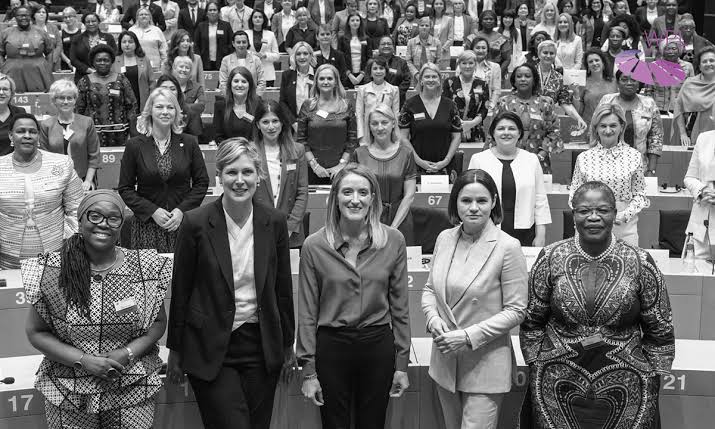
 I have to be honest with you. There is a version of this conversation I hear all the time where someone says gender parity in politics is essentially solved. You know the one where people claim representation has improved enough that the structural barriers are largely gone, so we can all move on to other issues. That version sounds nice, does it not? But it is not supported by the data, and I think pretending otherwise does not actually help anyone.
This deep dive into gender and political representation and leadership reveals why pretending we have solved the problem does no one any favors, and I will walk you through the data that proves it. Let me share something that stopped me cold when I first looked it up. As of 2023, women held approximately 26 percent of seats in national parliaments worldwide, according to the Inter-Parliamentary Union. I will repeat that because it is worth sitting with: twenty-six percent. Meanwhile, women make up just over half of the global population.
So we are talking about roughly a quarter of the legislative seats deciding policies for everyone. That is not parity. That is not even close. And the gap has not been closing at a rate that suggests it will magically fix itself anytime soon. I remember sitting in a local council meeting a few years back, watching the lineup of speakers. There were twelve people at that table, and only two of them were women. Nobody seemed to think anything was wrong. That is when it really hit me the quiet way underrepresentation becomes normalised. You do not notice it until you actually count.
So what is the holdup? People love to ask me this, as if there is one simple answer. There is not. The barriers come in all shapes and sizes. Structural ones like electoral systems that favour incumbents (who tend to be men), campaign financing that punishes newcomers, and party nomination processes that have historically smiled on male candidates. Then you have the cultural junk public scrutiny of appearance and personal life that falls way harder on women.
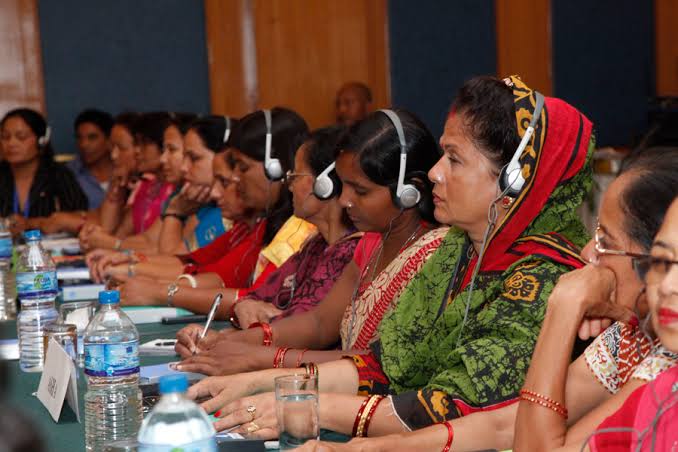
Researchers have also found persistent assumptions about leadership competence that link directly to gender bias. You have seen it. I have seen it. A woman speaks with authority and somehow she is “bossy.” A man does the same and he is “strong.” But here is where I get genuinely excited. When representation improves, real things change. Legislative bodies with higher proportions of women members have been shown to prioritize different policy areas healthcare access, childcare, education funding compared to male-dominated bodies facing similar constituents.
Let me be clear: I am not claiming that any particular policy agenda is inherently superior. That would be silly. What I am saying is that representation shapes outcomes. A legislative body that does not look like the population it governs is going to produce policies that reflect those absences. Is that really controversial? It seems like common sense to me.
Executive leadership tells a similar story. As of 2024, women serve as heads of government or state in roughly 13 percent of countries globally. Thirteen percent. That number should embarrass us. Research on executive leadership suggests that women leaders are not simply men with different demographics. They often bring distinct leadership styles, tend toward more collaborative decision-making processes, and in crisis situations have shown patterns of earlier and more decisive action.
Remember the early COVID-19 response? Several analyses pointed to better outcomes in countries led by women during that period. Imperfect case study, sure. But notable. None of this means that representation alone transforms governance. I would be lying if I said that. Institutions have inertia. Individual leaders of any background operate within structural constraints that limit personal impact. But the argument that gender composition of political leadership is irrelevant to policy outcomes? That does not hold up against the evidence. Not even a little bit.
So what do we do? Progress requires more than awareness. I wish awareness was enough, but it is not. Quota systems which have been implemented across dozens of countries in various forms show measurable results even when they are politically unpopular. The evidence is pretty clear here: structural interventions produce structural change. Waiting for culture to shift on its own has a poor track record. I have waited. You have waited. It does not work.
I will leave you with this. The next time someone tells you that gender in political representation is a solved issue, ask them to look at that 26 percent number with you. Ask them what world they are living in. And then maybe ask yourself what one small thing you could do today to support a local woman candidate, show up to a council meeting, or just stop pretending the gap is closing by itself. Because from where I am sitting, that gap is not going anywhere unless we push it.
References
Inter-Parliamentary Union. (2023). Women in National Parliaments. https://www.ipu.org/women-in-parliament
Wängnerud, L. (2009). Women in parliaments: Descriptive and substantive representation. Annual Review of Political Science, 12, 51–69. https://doi.org/10.1146/annurev.polisci.11.053106.123839
Garikipati, S., & Kambhampati, U. (2021). Leading the fight against the pandemic: Does gender ‘really’ matter? Feminist Economics, 27(1–2), 401–418. https://doi.org/10.1080/13545701.2021.1874056