
 Posted by
 I used to think race was obvious. You look at someone and you know. Black, white, Asian, Hispanic. Simple categories. Then I took a college anthropology course that dismantled everything I thought I knew. The professor asked a simple question: If race is biological, where exactly is the line between one race and another? No one could answer. The more I learned, the more I understood that race is not something we are born with. It is something we invented.
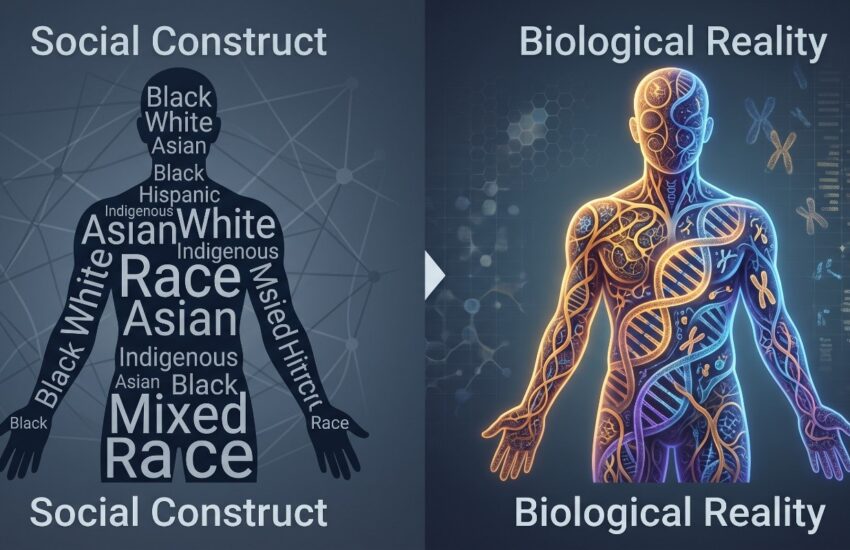
Race is a social construct. That means it has no basis in biology. There is no gene for race. There is no single trait that defines one racial group and excludes all others. Human genetic variation is continuous, not categorical. If you took the DNA of any two people on Earth, they would share 99.9 percent of their genetic material. The differences we use to define race are literally skin deep. They are variations in melanin, hair texture, and facial features that evolved in response to climate and geography, not as markers of distinct biological groups.
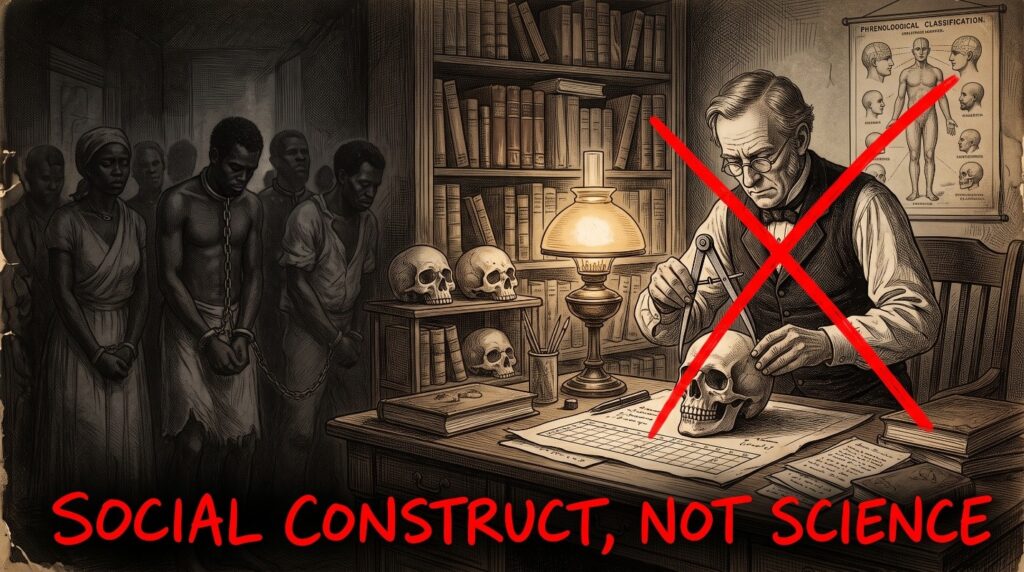
The concept of race as we know it is relatively recent. It emerged during the European Enlightenment and the age of exploration, when Europeans were encountering people around the world who looked different from them. They needed a way to justify conquest, colonization, and slavery. The idea of distinct, hierarchical races provided that justification. It was not science. It was politics dressed up as science. The same people who classified plants and animals also classified humans, placing white Europeans at the top and everyone else somewhere below.
That classification system had enormous consequences. It was used to justify the enslavement of Africans. It was used to justify the displacement and genocide of Indigenous peoples. It was used to justify immigration restrictions, segregation, and discrimination. It was used to deny people their humanity. And even though we now know that race has no biological basis, the social reality of race persists. It shapes where people live, where they go to school, what jobs they get, how they are treated by police, and how long they live.
I learned that race is real in its consequences but not in its biology. That distinction is crucial. Saying race is a social construct does not mean it is not real. It means it was created by people, and it can be changed by people. It means the hierarchies and inequalities we associate with race are not natural or inevitable. They were built. And they can be dismantled.
I also learned that race is not the same as ethnicity. Ethnicity refers to shared culture, language, ancestry, and traditions. You can be racially classified as one thing and ethnically identify as another. A person might be racially categorized as Black but ethnically identify as Nigerian, Jamaican, or African American. These are different dimensions of identity. Race is imposed from the outside. Ethnicity is often claimed from the inside.
The conversation about race is uncomfortable for many people, especially those who have never had to think about it. But discomfort is not a reason to avoid the topic. Understanding race helps us understand history. It helps us understand current events. It helps us understand the experiences of people who are treated differently because of how they look. It helps us build a more just society.
When I look at my children, I do not see a race. I see two human beings with a unique combination of genetics, personality, and potential. That is the truth that the social construct of race has obscured for centuries. We are one species. The boundaries we draw between us are not natural. They are choices. And we can choose differently.
References
- Stanford Encyclopedia of Philosophy. (2025). *Race*. [https://plato.stanford.edu/entries/race/](https://plato.stanford.edu/entries/race/)
2. Cornell, S., & Hartmann, D. (1998). *Ethnicity and race: Making identities in a changing world*. Pine Forge Press.
3. University of Leicester. (2021). *Guide to race-related terminology*. [https://le.ac.uk/-/media/uol/docs/about-us/equalities/guide-to-race-related-terminology-update-may-2021.pdf](https://le.ac.uk/-/media/uol/docs/about-us/equalities/guide-to-race-related-terminology-update-may-2021.pdf)
4. Omi, M., & Winant, H. (2015). *Racial formation in the United States* (3rd ed.). Routledge.
5. Smedley, A., & Smedley, B. D. (2012). Race in North America: Origin and evolution of a worldview (4th ed.). Westview Press.