

 Posted by
 I still remember the first time I really grasped what functionalism meant, and honestly, it felt like someone had handed me a pair of glasses I did not know I needed. Suddenly, I could see the invisible scaffolding holding up everyday life, the way schools operate, the rhythm of family dinners, even the strange respect we all seem to have for traffic lights without anyone holding a gun to our heads to make us stop.That is the thing about functionalism, once you understand this sociological theory, you start noticing it absolutely everywhere.
The roots of functionalism trace back to Émile Durkheim, who is widely considered the first real professor of sociology and frankly, the man had a brilliant way of looking at the world. Durkheim argued that society functions much like a living organism, which sounds simple enough until you actually sit with the idea for a moment. Just as your heart, lungs, and brain each play a distinct and irreplaceable role in keeping your body alive, functionalists argue that institutions like family, religion, education, and law each perform a distinct role in keeping society stable and functioning as a whole.
Understanding functionalism in sociology requires us to look beyond individual actions and see the deeper social patterns at work, which is precisely what makes this perspective so valuable for analyzing human behavior across different cultures and historical periods. Durkheim called the shared norms and values holding everything together “social facts,” which are basically external forces that shape individual behavior whether people consciously notice them or not.
That idea alone changed how I think about pretty much everything. One of Durkheim’s most fascinating contributions came from applying this macro-level theory to something we normally consider deeply personal and individual, which is suicide. I remember reading about this in my first sociology course and thinking, there is no way he is going to argue that suicide has social causes.
But Durkheim studied suicide rates across different social groups and demonstrated that even something as seemingly private as taking one’s own life could be explained through social patterns rather than pure individual psychology. This is where his concept of anomie comes from, which is essentially a breakdown in social norms that leaves individuals feeling unmoored from the structures that would normally guide their behavior.
It is a powerful reminder that social cohesion and social stability are not just abstract ideals but genuine needs that people rely on to navigate their lives. Talcott Parsons picked up Durkheim’s framework decades later, during the 1940s and 1950s, and built it into a more formal theoretical system. Parsons extended the organic analogy even further, arguing that institutions actively promote what he called value consensus, which is a shared set of agreements about social norms that hold communities together.
Under this view, education does not just teach math and reading, it socializes children into shared values and integrates them into the broader social order. Religion fosters cohesion through shared belief and ritual. Law provides the formal framework for regulating behavior when informal norms are simply not enough to maintain order. I have to be honest though, I do think functionalism has real limits, and it is worth naming them rather than presenting the theory as some settled truth that nobody should question.
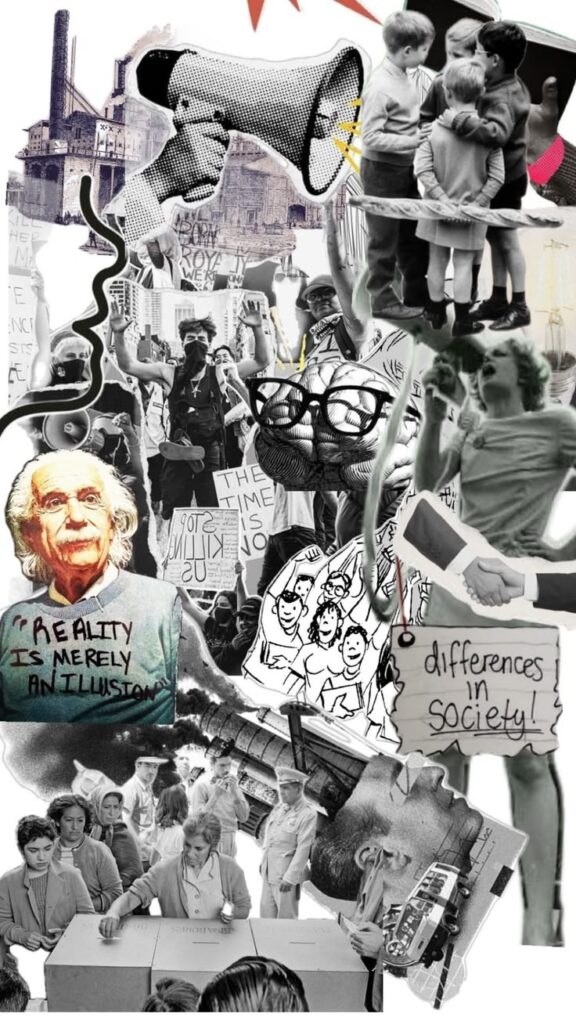
Critics have pointed out that functionalism tends to assume institutions are basically working as intended, which can make it slow to account for conflict, inequality, or outright resistance within a society. Paul Willis’s well-known study of working-class students actively resisting the norms their schools tried to instill is a perfect example of behavior that does not fit neatly into a functionalist framework built around passive acceptance. Is it really that simple?
Can we honestly say every institution exists solely to benefit society as a whole, or do some institutions primarily serve the interests of those already in power? Even with those limitations, functionalism earns its place as one of sociology’s three major theoretical traditions, alongside conflict theory and symbolic interactionism, because it gives you a genuinely useful lens for asking what purpose a given institution serves.
Sometimes the honest answer turns out to be “not the purpose it claims,” but even that admission is valuable because it forces us to think critically about how social structures operate. The functionalist perspective helps us understand social structures by examining how different parts of society work together to maintain order and stability, which is no small thing in a world that often feels chaotic and fragmented.
Let me share a small personal example that might illustrate what I mean. A few years ago, I found myself in a temporary job that felt completely meaningless. I was filing paperwork, answering phones, and wondering what possible purpose any of it served beyond keeping me busy. But then I started thinking about it through a functionalist lens and realized that even that boring job was playing a role in the broader economy, keeping information organized, facilitating communication, and providing a service that other people relied on. Did I suddenly love the job? Absolutely not.
But I did gain a different perspective on how even the most mundane social role can contribute to the larger social structure in ways we rarely stop to appreciate. The functionalist theory of society continues to evolve and face new challenges in our increasingly complex world. Contemporary sociologists have adapted Durkheim and Parsons’ ideas to address issues like globalization, digital communities, and the changing nature of work.
These modern applications show that functionalism is not some dusty old theory with no relevance to contemporary life, it remains a vital tool for understanding how social structures shape human behavior and how institutions adapt to changing circumstances. Where does that leave us? I think functionalism works best as a starting point rather than a final answer. It gives us a framework for asking good questions about why things are the way they are, even when the answers turn out to be more complicated than the theory initially suggests.
The next time you find yourself stuck in traffic or sitting through a boring meeting, try asking yourself what social function that experience might be serving. You might be surprised by what you come up with. If you would like to go deeper into the functionalist perspective and how it compares to other major sociological frameworks, you can find a thorough resource at Sociology.Institute (2026) that breaks down the theory in even more detail.
References
Milton, D. (2007). Sociological theory: An introduction to functionalism. University of Kent. https://kar.kent.ac.uk/62739/1/Functionalism%202007.pdf
Simply Psychology. (2025, September 9). Émile Durkheim’s theory. https://www.simplypsychology.org/emile-durkheims-theories.html
Sociology.Institute. (2026, March 9). Tracing the evolution from positivism to functionalism in sociology. https://sociology.institute/sociological-theories-concepts/evolution-from-positivism-to-functionalism-sociology/