
 Posted by
 Discover how the sociology of state and government explains power, authority, and civic trust, and why daily participation keeps institutions running. I have spent a strange amount of time lately thinking about something most people only think about every four years, around the time campaign signs start sprouting in front yards like crabgrass nobody asked for.
I am talking about the state, the government, and the quiet, almost invisible ways these structures organize how we live, work, and even argue with each other at family dinners. Sociology of state and government sounds like a phrase you would find buried in a syllabus, and honestly, it is, but it also explains a lot about why your neighbor trusts the mayor, and you do not, or why a county clerk’s office can feel either welcoming or like a small bureaucratic nightmare depending on the day you walk in.
I grew up in a house where my grandfather kept a stack of newspapers by his recliner and would read me bits of local government coverage like they were ghost stories. He was fascinated by school board meetings of all things. Why does a man get this worked up about zoning ordinances? I used to wonder. It took me years to understand that he was not actually obsessed with zoning. He was obsessed with power, who holds it, who gave it to them, and whether the rest of us actually believe they deserve it.
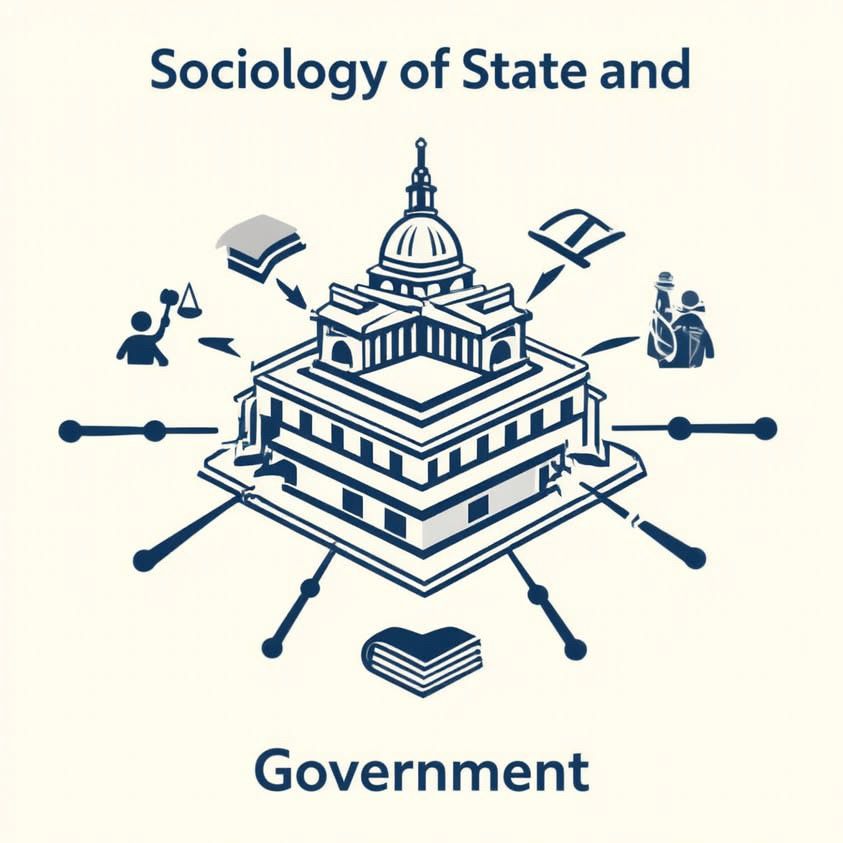
That last part matters more than people realize. Sociologists tend to separate power from authority, and once you see the difference, you cannot unsee it. Power is simply the ability to make someone do something, whether they like it or not. Authority is different. Authority only works because enough people accept it as legitimate. A police officer directing traffic has authority because drivers generally agree that stopping at a red light or following an officer’s hand signal is reasonable.
Take away that agreement, and all you have left is a person standing in the street hoping for the best. Max Weber spent a great deal of his career untangling this, and once you read his work, it becomes hard to look at any government office without asking yourself whether people are cooperating because they want to or because they are afraid not to.
Governments take a lot of different shapes, and I do not think most of us spend much time comparing them, since we tend to assume the one we grew up under is simply how things are supposed to work. Monarchies, oligarchies, dictatorships, and democracies all answer the same basic question in wildly different ways, namely, who gets to decide for everyone else. I once sat through a documentary about a small monarchy and kept waiting for the twist, the part where it turned out to secretly function like a democracy underneath. There was no twist. People genuinely organized their entire society around inherited royal authority, and it worked for them, at least in their own telling.
Sociologists also argue about why government exists in the first place, and I find this part oddly comforting, because it means there is no single correct answer that the rest of us simply failed to notice. Functionalists tend to say government exists to keep society running smoothly, handling shared needs like defense, infrastructure, and law enforcement.
Conflict theorists look at that same government and see something closer to a tool that wealthier or more powerful groups use to protect their own interests. Symbolic interactionists zoom in even further, paying attention to how everyday interactions, the way a clerk speaks to you, the tone of a public announcement, shape whether people feel like government belongs to them or looms over them. None of these views is wrong exactly. They are simply looking at the same elephant from different rooms.
What strikes me most, especially after spending months writing about insurance regulation and business policy for clients, is how much civic life depends on people actually showing up. Government does not run itself in some abstract cloud somewhere. It runs because people vote, volunteer, attend meetings, or, at a minimum, complain loudly enough that someone official hears them.
Recent national data shows that informal community involvement, things like helping a neighbor or running an errand for someone, has actually been climbing back toward pre-pandemic levels, which I find weirdly hopeful. It suggests that even when people feel disconnected from official institutions, they are still finding small ways to participate in the social fabric that governments are ultimately built on top of.
My grandfather passed away a few years ago, but I still think about those newspaper stories whenever I drive past a county building or catch a city council clip online. He was right, in his own roundabout way. Government is never just paperwork and ordinances. It is people deciding, again and again, whether to believe in each other enough to keep the whole arrangement standing, and that, more than any law or constitution, is what the sociology of state and government is really trying to explain.
Reference
Conerly, T. R., Holmes, K., & Tamang, A. L. (2026). 17.2 Forms of government. In Introduction to sociology 3e. OpenStax. https://openstax.org/books/introduction-sociology-3e/pages/17-2-forms-of-government
Conerly, T. R., Holmes, K., & Tamang, A. L. (2021). Chapter 17: Politics, power, and government (Section summary). In Introduction to Sociology (3rd ed.). OpenStax. https://openstax.org/books/introduction-sociology-3e/pages/17-section-summary
U.S. Census Bureau. (2024, November). New U.S. Census Bureau and AmeriCorps research tracks virtual volunteering for the first time. https://www.census.gov/library/stories/2024/11/civic-engagement-and-volunteerism.html