
 Posted by
 I have to admit, tourism feels like one of those topics that barely needs any analysis. You know what I am talking about. People pack a bag, they hop on a plane, they take a thousand photos of the same landmark, and then they go home. Simple enough, right? But here is the thing. The last time I was standing in a crowded piazza eating an overpriced gelato, I could not shake this weird feeling. Like I was not really there. Like I was just following a script someone else wrote.
That is when I realized the sociology of tourism is actually remarkably dense. It is not just movement. It is a full-blown social institution with its own rituals, power struggles, and cultural baggage. And honestly? It is a little uncomfortable to think about. If you have ever wondered why your vacation felt more like a performance than an adventure, this deep dive into the sociology of tourism explains the weird tension between authentic travel and staged experiences.
Let me rewind. There is this writer, Dean MacCannell, who basically framed the tourist as a kind of modern pilgrim. We are all out here searching for something real. An authentic experience. A moment that feels untouched by the outside world. But here is the cruel joke. The world we travel through increasingly feels staged. He calls it “staged authenticity,” and it is one of those ideas that haunts you once you learn about it.
Have you ever wandered into a “local” market only to realize every single vendor takes credit cards and sells the exact same plastic trinket? Or what about that traditional dance performance that is somehow scheduled three times a day for bus groups? You are not imagining things. That nagging sense in your gut? That is the tourism industry quietly organizing culture as a product. And I do not know about you, but that makes me feel a little bit like a sucker.
This creates real tension, obviously. Imagine you live in a gorgeous seaside village. Your family has been there for generations. But your economic survival now depends on catering to visitors who want a “rustic” experience. Visitors who might get annoyed if you do not smile at them or if the Wi-Fi is slow. Sociological literature calls this the “tourist gaze,” a concept from a guy named John Urry. Basically, we consume places through a set of expectations created by Instagram, travel blogs, and old movies. We expect Paris to be romantic.
We expect Thailand to be spiritual. And that gaze is not neutral. It is a bulldozer. It shapes what gets preserved, what gets demolished, and frankly, what local people have to perform for us. I remember being in Venice once, watching a gondolier sighing between takes because a tourist yelled at him for not singing loud enough. That moment stuck with me. Who are we to demand a performance?
Now, I do not want to be totally gloomy. Because tourism is not only extractive. I have also been to places where tourism genuinely helped. Research from the OECD has shown that well-managed tourism can pour money into local economies, fix up infrastructure, and even help preserve cultural heritage. But here is the catch.
That only works when communities retain meaningful control over how their heritage is represented. Not when some international corporation decides what is “authentic” enough to sell. The balance is hard to find. Honestly, I have rarely seen it sustained without a lot of local screaming and policy fights.
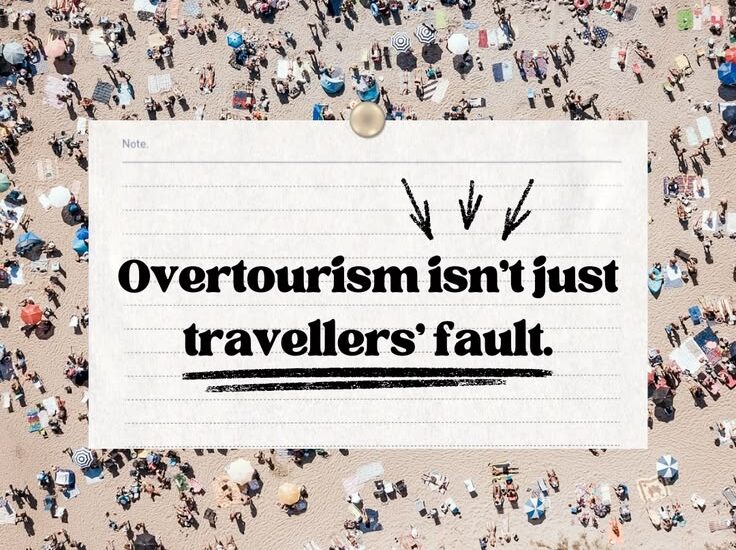
What makes the sociology of tourism particularly interesting right now is this monster called overtourism. Researchers use that word to describe what happens when visitor volume just crushes a destination’s social and ecological limits. You have seen the headlines. Venice. Barcelona. Kyoto. All of these beautiful places have been grappling with the same nightmare. Housing prices go through the roof because landlords want AirBnB money.
Local shops close and get replaced by souvenir stores. And the environment? Do not get me started on the erosion, the trash, the sheer exhaustion of the people who actually live there. I walked down Las Ramblas in Barcelona a couple years ago, and I swear, I could not hear a single person speaking Spanish. That is not travel. That is a takeover.
So here is the question I keep coming back to. Tourism is not going to disappear. We love it too much. But who gets to define what it looks like? And who bears the cost when it goes wrong? The sociology of tourism is basically asking us to stop being so naive. We are not just innocent explorers. We are participants in a system that can either lift people up or grind them down. And the next time you book a flight, I dare you to ask yourself: am I a pilgrim searching for the truth, or am I just another customer in a very old, very strange performance?
References
MacCannell, D. (1976). The Tourist: A New Theory of the Leisure Class. Schocken Books.
Urry, J. (1990). The Tourist Gaze: Leisure and Travel in Contemporary Societies. Sage Publications.
OECD. (2020). OECD Tourism Trends and Policies 2020. OECD Publishing.
Goodwin, H. (2017). Responsible Tourism: Using Tourism for Sustainable Development. Goodfellow Publishers.