
 Posted by
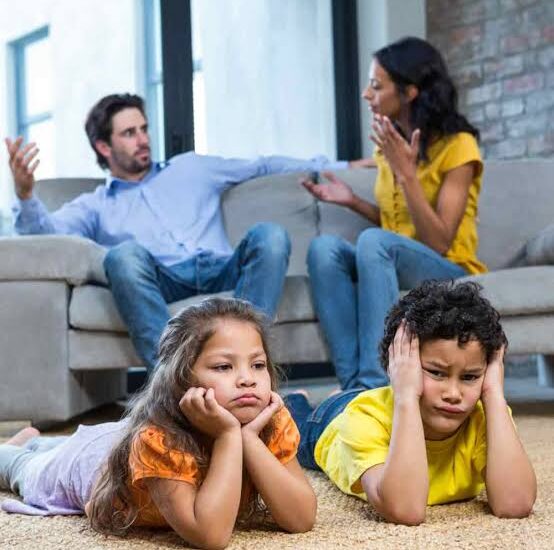
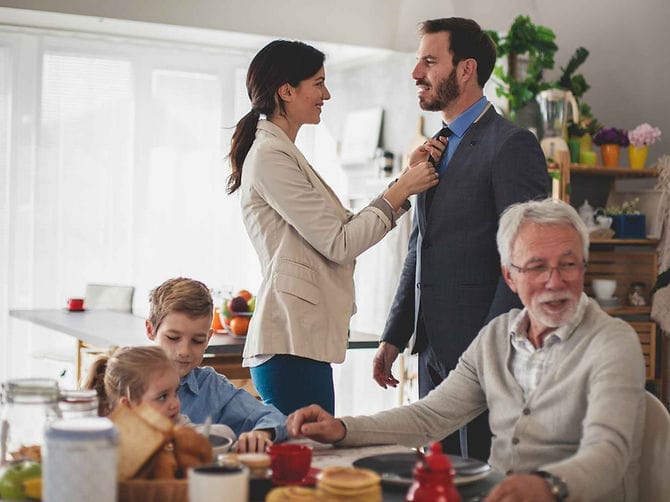
 I will be the first to admit that my family does not look like the ones you see in commercials. You know the ones everyone passes the mashed potatoes with a smile, no one storms off after a passive-aggressive comment about somebody’s life choices. My family is louder, weirder, and way more complicated than that. And honestly? I think that is the entire point. Every family has a story it tells about itself. In my family’s version, we all get along pretty well, conflicts are small and blow over fast, and the whole structure is basically functional.
But then there is the real family, the one that actually shows up for Thanksgiving. And that family is a beautiful, frustrating, lovable mess. If you have ever wondered whether your own chaotic household is normal, here is the truth: messy family dynamics are not a sign of failure but a sign that real people with real emotions are trying to figure life out together. That realization did not hit me until I started looking into the research. So what are family dynamics, exactly? I am talking about the patterns of interaction, power struggles, communication habits, and emotional exchanges that define how a family works.
Researchers in social psychology and sociology have spent decades studying this stuff. And what they keep finding is that these dynamics shape who we become well into adulthood. Think about it. The family you grew up in influences how you handle conflict at work, whether you freeze up or speak out when someone in authority pushes you, how comfortable you are with deep intimacy, and even how your body responds to stress. These are not small things. They are the building blocks of your entire emotional life.
I remember one time when I was a teenager, I completely lost it at my dad over something stupid, probably curfew-related. I yelled, slammed a door, the whole performance. And my mom just sat there reading her book. Later, I asked her why she did not intervene. She said, “You two needed to figure it out without me.” At the time, I thought she was being lazy. Now I realize she understood something important about family systems theory without ever having read a single psychology paper.
Speaking of which, one of the most useful frameworks I have come across is family systems theory, developed by psychiatrist Murray Bowen back in the mid-twentieth century. The core insight is brilliant in its simplicity: a family functions as an emotional unit, not just a collection of separate individuals. When one person in the system experiences stress or change, it ripples through everyone. Anxiety travels through that house like a bad smell. Roles shift. A kid starts acting out at school.
A parent withdraws into work. What looks like an individual problem is often better understood as a symptom of system-level tension. You can read more about how childhood family roles affect adult relationships here. What strikes me about this framework is how perfectly it describes things I have felt but could never name. The sibling who always plays peacemaker at every holiday dinner. The parent who cracks a joke, the second thing gets tense. The one family member whose absence suddenly reorganizes everybody else’s behavior. These are not just personality quirks.
They are patterns of a system trying to keep itself steady. Have you ever noticed how one person leaving the room changes the whole vibe? That is the system at work. Now, birth order research adds another layer here, though I should warn you that the findings are more contested than people think. You have probably heard the general pattern: firstborns tend to be conscientious and achievement-oriented, laterborns lean toward openness and risk-taking.
There is some evidence for that, but the effect sizes are modest. Family size, money, culture, and the specific relationships inside your family all moderate these patterns enormously. My older brother is a rule-following perfectionist, sure. But I have also met plenty of rebellious firstborns and neurotic youngest children. So take the birth order stuff with a grain of salt. What is less contested is the role of communication styles in family health. I have seen this play out in my own life.
Families where people feel safe expressing disagreement or distress without fear of rejection, those families consistently do better. Better mental health outcomes, more stable relationships, and less long-term resentment. This holds across cultures, too, though what “open communication” looks like varies a lot depending on where you are from. In some families, open communication means yelling everything out and then hugging it out. In others, it means a quiet conversation over tea. The key is that people feel heard, not that they follow a script.
Let me ask you something. Have you ever been in a family meeting where everyone is pretending to be fine, but you can feel the tension like a third person in the room? That is the opposite of open communication. And it does not work. Not long-term. Here is what I have finally accepted after years of studying this stuff and living through my own family’s ups and downs. The messiness of family dynamics is not a sign that something has gone wrong.
Tension, negotiation, the occasional blow-up, those are features of any system involving human beings with different needs, histories, and bad days. The real question is not whether conflict exists. It is whether your family has the capacity to work through it without permanent damage. Most families that function reasonably well are not conflict-free. They are just reasonably good at repair.
So if your family is messy, weird, and nothing like the ones in the commercials? Good. That means you are doing it right.
References
Bowen, M. (1978). Family Therapy in Clinical Practice. Jason Aronson. https://www.worldcat.org/title/family-therapy-in-clinical-practice/oclc/3573823
Sulloway, F. J. (1996). Born to Rebel: Birth Order, Family Dynamics, and Creative Lives. Pantheon Books. https://www.worldcat.org/title/born-to-rebel/oclc/33103546
Olson, D. H. (2000). Circumplex model of marital and family systems. Journal of Family Therapy, 22(2), 144–167. https://doi.org/10.1111/1467-6427.00144