

 Posted by
 When I first started studying sociology in college, I remember walking into my Introduction to Social Conflict class with this naive assumption that violence was simply about bad people making bad choices. My professor, Dr. Martinez, spent the entire semester dismantling that oversimplified view, and honestly, it changed the way I see everything from playground fights to international wars.
The sociology of violence and conflict is not just about understanding why people hurt each other. It goes much deeper than that, examining the social structures, cultural norms, and institutional forces that create the conditions for conflict to emerge and persist. Explore how social structures, cultural norms, and institutions shape violence and conflict in society.
Violence does not happen in a vacuum. This is probably the most important lesson I learned, and it took me longer than I care to admit to fully grasp it. We like to think of violent acts as isolated incidents committed by individuals who have somehow strayed from the path of civilized behavior. But sociologists look at violence through a completely different lens. They examine how our social institutions, economic systems, and cultural beliefs create environments where violence becomes not just possible but sometimes even expected or normalized.
Consider for a moment how different forms of violence get treated differently based on who commits them and who the victims are. Domestic violence was not even recognized as a serious crime in many societies until relatively recently. Why? Because patriarchal social structures positioned women as property or subordinates within the family unit. The violence was there all along, but the social framework made it invisible or acceptable. This is what sociologists mean when they talk about structural violence, the harm that comes from the very organization of society itself rather than from individual malicious intent.
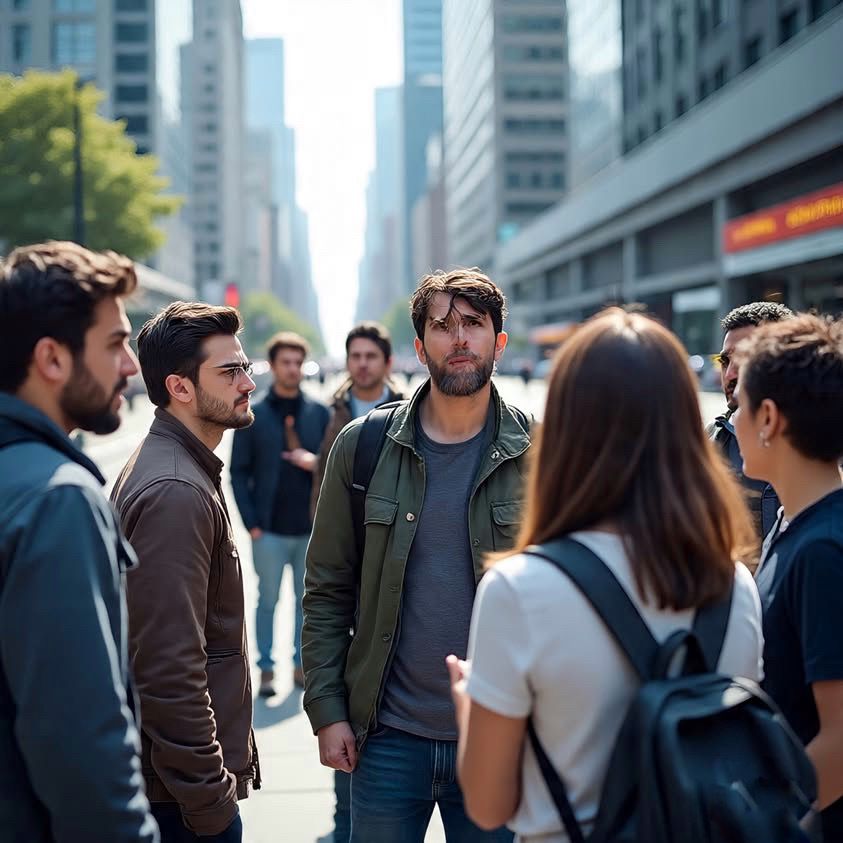
I remember reading about the concept of social stratification and its relationship to conflict theory during my graduate work. Karl Marx argued that conflict between social classes was inevitable because of the inherent inequalities in capitalist systems. Whether you agree with Marx or not, you cannot deny that economic inequality creates tension. When resources become scarce or when large groups of people feel systematically excluded from opportunities, conflict becomes more likely. We see this pattern repeated throughout history and across cultures.
The interesting thing about studying violence from a sociological perspective is that it forces us to ask uncomfortable questions about our own society. What norms do we accept without questioning? How do our institutions perpetuate cycles of violence? I find myself thinking about this whenever I watch the news.
Gang violence in urban areas often gets framed as a problem of individual morality or criminal behavior, but sociologists point to factors like concentrated poverty, lack of educational opportunities, residential segregation, and the breakdown of community institutions. When young people grow up in environments where legitimate pathways to success seem blocked, alternative social structures emerge to fill that void.
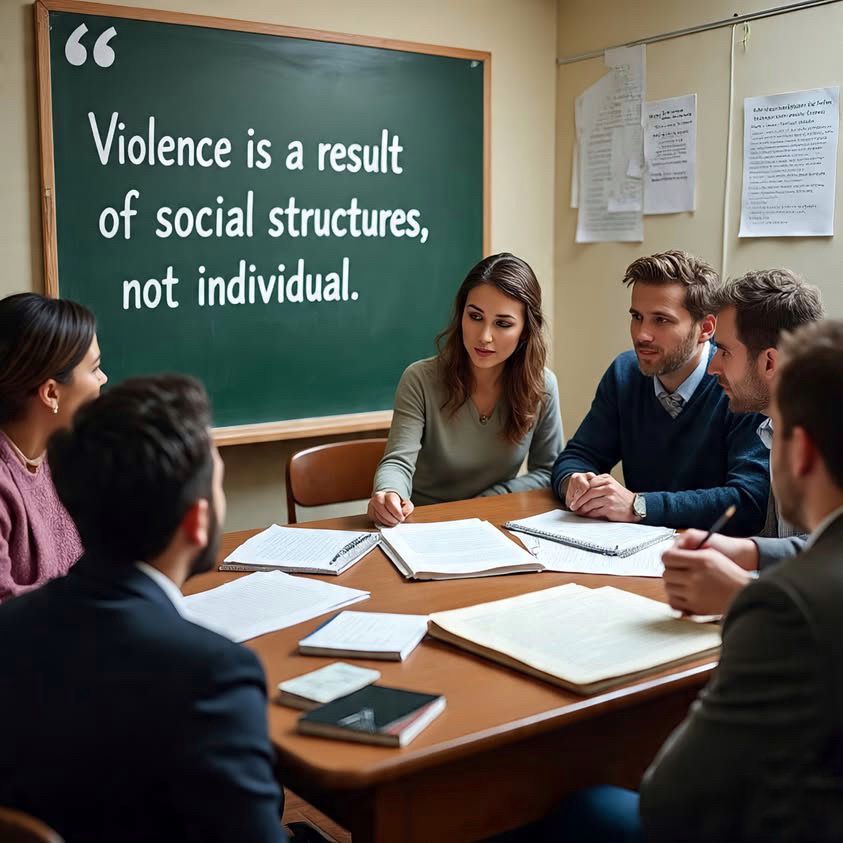
Cultural factors play an enormous role in shaping how societies understand and respond to violence and conflict. Some cultures emphasize honor and retaliation, while others prioritize reconciliation and restorative justice. These cultural scripts get internalized from a young age, shaping how individuals respond to perceived threats or insults. The concept of a culture of violence suggests that in some communities, violent responses become normalized and even expected in certain situations. This does not mean that people in those communities are inherently more violent, but rather that the social learning and reinforcement patterns differ.
Symbolic interactionism offers another valuable framework for understanding conflict. This perspective focuses on how people create meaning through their interactions with others. Violence often emerges from situations where individuals feel their identity or status has been challenged or threatened.
Think about road rage incidents. The actual stakes are usually incredibly low, but in that moment, the interaction becomes about respect, dominance, and identity. The person who cut you off in traffic has symbolically disrespected you, and some people respond to that symbolic threat with actual violence.
One aspect of violence that sociology helps illuminate is its collective dimension. Riots, ethnic conflicts, and wars cannot be explained simply by adding up individual motivations. Collective violence has its own dynamics, including processes of dehumanization, groupthink, and diffusion of responsibility.
When I studied the Rwandan genocide, what struck me most was how ordinary people participated in extraordinary violence. The sociological explanation points to how ethnic categories became politicized, how propaganda dehumanized the targeted group, and how social pressures to conform made resistance difficult.
Reference
American Sociological Association. (2023). Violence and social structure: Understanding collective harm. ASA Publications.
Bureau of Justice Statistics, U.S. Department of Justice. (2024). Patterns of violence in American communities: A statistical overview. Government Printing Office
Centers for Disease Control and Prevention. (2024). The social-ecological model: A framework for prevention of violence. National Center for Injury Prevention and Control. https://www.cdc.gov/violenceprevention/about/social-ecologicalmodel.html