

 Posted by
 I used to think of power mostly in political terms, you know, presidents, parliaments, elections. That was my view for the longest time. But then studying sociology completely reshaped that perspective, and I now believe power is one of the most underrated concepts for understanding everyday life, not just the machinery of government. It shows up in the most mundane interactions, a manager quietly overruling an employee’s idea, a landlord setting terms a tenant cannot negotiate, or a parent deciding the rules of the household.
Once you start looking for it, you notice power everywhere, the same way disaster researchers notice social vulnerability once they know what to look for. It is less about the grand stage and more about the small, constant negotiations that define our daily existence, which is why a sociological perspective on power dynamics is so vital for making sense of our world.
The foundational definition in sociology comes from Max Weber, who described power as the probability that one actor within a social relationship will be able to carry out their own will despite resistance, regardless of the basis on which that probability rests. I have always appreciated how neutral this definition is. Weber was not making a moral judgment, saying power is inherently good or bad.
He was simply identifying it as the raw capacity to make things happen your way even when someone else objects. That neutrality really matters, because it forces you to notice authority and influence in places you might otherwise overlook, a friendship where one person always decides the plans, or a workplace where one voice consistently sets the agenda. It is a purely descriptive tool for analyzing social relationships.
Weber drew a sharp distinction between this raw power and what he called domination, or legitimate authority. Domination describes a relationship where people comply not because they are forced to but because they believe the person or institution in charge has a rightful claim to their obedience. This is the crucial difference between a police officer directing traffic and a mob demanding compliance at gunpoint, both can produce the same outcome, people stopping their cars, but only one of those relies on a sense of legitimacy.
I think this distinction is the most useful tool sociology offers for evaluating institutions, because it asks not just whether an authority gets obeyed, but whether that obedience rests on genuine consent or on fear, which is the core of how political power is perceived. This brings me to a clear opinion on modern debates. I think our current discussions about institutional trust, in governments, in employers, in the media, are really debates about legitimacy, even when nobody uses that word.
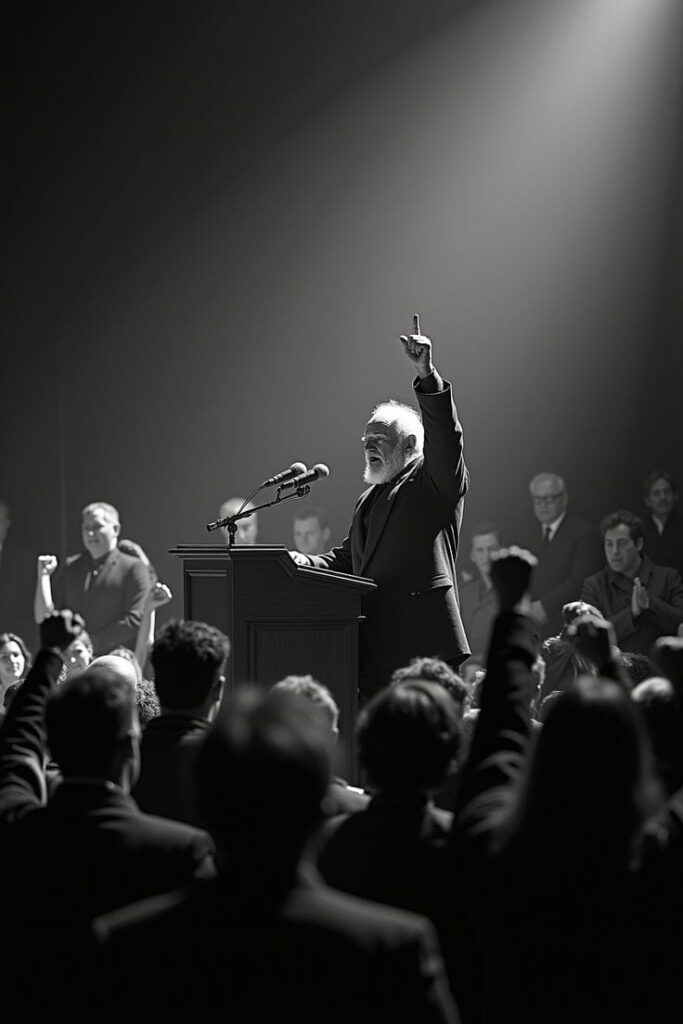
We are not just arguing about policies, we are arguing about whether those in charge have the moral right to lead. Weber went further and argued that power in society is distributed along three separate dimensions: class, status, and party. This directly challenged Marx’s view that economic class alone determines who holds power. Class reflects your position in the marketplace, but status, which is social honor and prestige, and party, which is your political affiliation and organizational capacity, can grant influence independent of wealth.
That is why a low-income community organizer can sometimes shape outcomes that a wealthy but socially isolated individual cannot. It is a much more nuanced framework for understanding social stratification. I find this three-dimensional view far more accurate than a purely economic account of power, because it explains phenomena that a class-only model cannot. It explains why certain professions, like teaching or nursing, carry prestige disproportionate to their pay, or why a political movement can mobilize people who have little in common economically.
Sociologists who study government and politics generally agree that power is an entity’s or individual’s ability to control or direct others, while authority is influence grounded in perceived legitimacy, and this distinction is key to understanding issues like civil liberties and economic inequality. Sociology teaches us that a society’s true character is often revealed not by its laws, but by the legitimacy it grants to its wielders of power.
The implications of this are profound, suggesting that we must look beyond official rules to understand how a society operates. The very fabric of social justice is woven into these perceptions of authority . Power, in other words, is not just about who occupies the highest office. It is a constant undercurrent in ordinary social relationships.
Understanding how it operates, and more importantly, whether it is considered legitimate, tells you far more about a society than counting its laws ever could. It is about the subtle forces that shape our daily lives, from the offices we work in to the homes we grew up in. For a deeper dive into this fascinating topic, you might find the discussions in the Encyclopedia of Sociology helpful . When we learn to see power in its many forms, we begin to understand the true mechanics of the social world around us.
References
OpenStax. (2021, June 3). 17.1 Power and authority. Introduction to sociology 3e. https://openstax.org/books/introduction-sociology-3e/pages/17-1-power-and-authority
Sociology.Institute. (2026, March 9). Max Weber’s analytical framework of power and domination. https://sociology.institute/sociological-theories-concepts/max-weber-power-domination-analysis/
Opentextbc.ca. (2023, September 7). 17.1 Power and authority. Introduction to sociology, 3rd Canadian edition. https://opentextbc.ca/introductiontosociology3rdedition/chapter/17-1-power-and-authority/