
 Posted by
 I remember sitting in my undergraduate sociology class when conflict theory first clicked for me, and suddenly everything from classroom dynamics to national politics looked completely different. If you have ever wondered why some groups hold power while others struggle, this framework for understanding social inequality and class conflict offers some surprising answers.
I first encountered conflict theory in an undergraduate sociology course, and it fundamentally changed how I view social structures. The professor asked us to analyze why certain groups consistently hold power while others remain marginalized. That question opened a door I did not know existed, revealing patterns of inequality that seemed invisible before but were actually quite obvious once examined through the right lens.
I remember walking to my next class, looking around campus, and thinking: wait, who really runs this place? Conflict theory emerged primarily from the work of Karl Marx in the nineteenth century, though it has evolved considerably since then. At its core, the theory posits that society is characterized by ongoing competition for limited resources rather than harmony and consensus.
Marx viewed capitalist societies as fundamentally divided between the bourgeoisie, who owned the means of production, and the proletariat, who provided labor. This economic relationship formed the foundation of class struggle and social change. But here is the thing: this is not just dusty nineteenth-century philosophy.
This framework for understanding social inequality feels almost painfully relevant today. What makes conflict theory particularly powerful is its emphasis on power dynamics as the engine of social organization. Unlike functionalist perspectives that view society as cooperative, conflict theorists see social order as maintained through domination.
The wealthy and powerful use their position to preserve and expand their advantages, creating inherent tensions that drive historical change. Have you ever noticed how tax policies seem to benefit corporations more than workers? Or how universities named after industrialists often produce executives who defend the very systems those industrialists built? That is not a coincidence.
That is conflict theory playing out in real time. Max Weber expanded conflict theory beyond purely economic factors in the early twentieth century. While agreeing with Marx about competition over resources, Weber recognized that power extends beyond ownership of production. He introduced social status and prestige as additional dimensions of inequality.
Education, race, gender, and other factors create what Weber called “market situations” where different groups have unequal access to opportunities. I think about this every time I read about legacy admissions or unpaid internships.
The competition never really stops; it just changes uniforms. Ralf Dahrendorf made crucial contributions to modernizing conflict theory in the mid-twentieth century. His work “Class and Class Conflict in Industrial Society” reframed Marx’s ideas for contemporary bureaucratic societies. Dahrendorf argued that authority, rather than property ownership alone, serves as the primary source of conflict.
In modern organizations, those who hold positions of authority command resources and make decisions that affect subordinates, creating systematic tensions between the command class and the obey class. I spent three years working in a large corporation before graduate school, and I can tell you Dahrendorf absolutely nailed it.
The meetings, the memos, the subtle ways people deferred to certain titles. Authority creates its own gravitational field. One aspect of conflict theory that I find particularly relevant is its application to contemporary social movements. The theory helps explain everything from labor strikes to civil rights activism to debates over income inequality.
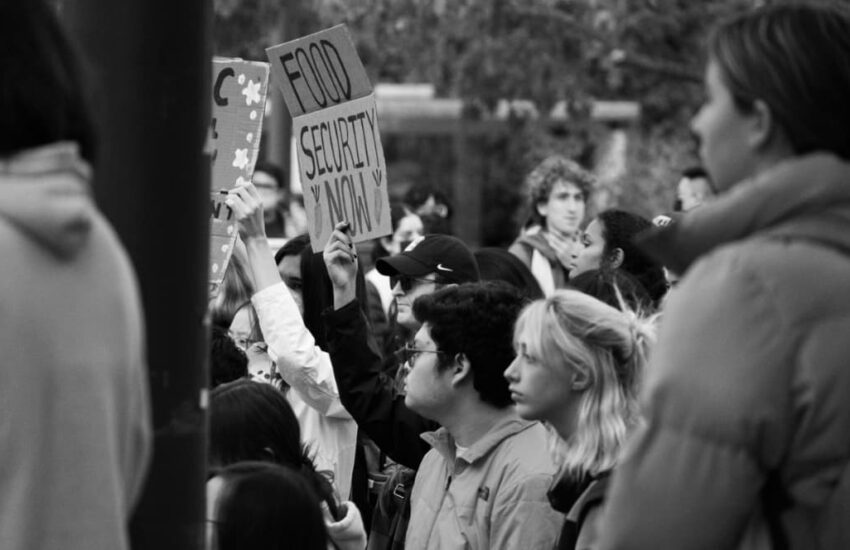
When workers organize unions or marginalized groups demand equal treatment, they engage in the kind of conflict that the theory predicts as inevitable for social progress. I volunteered with a tenant rights organization a few years ago, helping families fighting eviction during the pandemic. The landlords had lawyers. The city had lawyers. The tenants had each other and a clipboard.
Watching that power imbalance up close made me realize that conflict is not something breaking the system; it is the system, revealed. The theory has faced legitimate criticisms. Some argue it overemphasizes conflict while neglecting cooperation that also binds societies together. Marxist critics contend that later versions, particularly Dahrendorf’s approach, dilute revolutionary potential by treating conflict as manageable through institutional reforms.
I wrestle with this tension myself. Is it enough to seek better representation within fundamentally unequal systems? Should we be fixing the machine or building a new one? I do not have a tidy answer, and honestly, I am suspicious of people who do.
Despite these limitations, conflict theory remains essential for understanding power and inequality. It provides analytical tools for examining how dominant groups maintain control, how resources get distributed unequally, and why social change often requires struggle. The theory reminds us that social institutions like education and law enforcement do not exist in neutral space but often reflect existing power structures.
A curriculum is not just a list of books. A policing budget is not just a number. These are choices about whose lives matter and whose stories get told. I have come to view conflict theory not as the only lens for understanding society but as an indispensable one.
It reveals dimensions of social life that more optimistic frameworks obscure. When we ask who benefits from current arrangements, we engage in the critical analysis that conflict theory demands. And maybe that is the real gift of this perspective: it does not let us look away.
References
Lumen Learning. (n.d.). Conflict Theory and Society. Introduction to Sociology. Retrieved from https://courses.lumenlearning.com/wm-introductiontosociology/chapter/conflict-theory-2/
Simply Psychology. (2023). Conflict Theory in Sociology. https://www.simplypsychology.org/conflict-theory.html
EBSCO Research Starters. (n.d.). Conflict Theory. Social Sciences and Humanities. https://www.ebsco.com/research-starters/social-sciences-and-humanities/conflict-theory
Hub Sociology. (2025). Ralf Dahrendorf’s Views on Conflict Theory & 22 Important Qs. https://hubsociology.com/ralf-dahrendorfs-views-on-conflict-theory-22/