
 Posted by
 I remember standing in a toy store a few years ago, watching a young father navigate the aisles with his daughter, who could not have been more than four. She wanted the neon green dinosaur. He hesitated, looked at the shelf, and gently guided her toward a pink plush cat instead. “That one is for boys, honey,” I heard him say. I do not think he meant any harm.
He was probably trying to protect her from the playground teasing that would inevitably come if she showed up with that dinosaur. But watching that moment, I could not help wondering what message actually landed with her.
Understanding how gender socialization shapes children from their earliest years helps explain why something as simple as choosing a toy can carry so much weight, and why becoming aware of these patterns matters for everyone who cares about raising healthy, authentic kids. She learned something in that aisle, even if neither of them realized it.
That is how gender socialization works. It is not usually dramatic. It does not arrive through formal lessons or official policies. It creeps in through a thousand small moments just like that one: the instinctive reactions, the gentle redirections, the assumptions we do not even know we are making.
By the time most children enter preschool, researchers have found they have already absorbed remarkably sophisticated ideas about what girls do and what boys do, how girls should feel, and how boys should handle their emotions.
Three years old. Can you imagine carrying expectations that heavy at an age when you are still figuring out how to use a fork? For girls, the script tends to emphasize warmth, caregiving, and emotional sensitivity. These are beautiful qualities, do not misunderstand me.
But when they become the only qualities encouraged, something gets lost. I think about my niece, who loved taking things apart to see how they worked until somewhere around second grade, when she suddenly decided she hated science. Nothing had happened, not really.
Except that everything had happened, the subtle cues, the classroom dynamics, the media messages, the way brilliance in television shows and movies kept getting coded as male. A study I read in Science confirmed what I suspected: girls start avoiding activities described as requiring high intelligence around age six. Six. That is not nature unfolding. That is culture teaching.
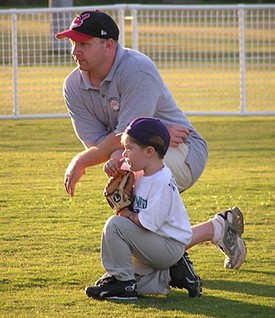
Boys get their own version of the script, and it is just as limiting. We hand them trucks and tell them to be tough. We praise them for being strong and mock them for showing fear. We say “boys will be boys” when they push and shove, as if that phrase explains anything or excuses everything. I have watched grown men struggle to name their own emotions, and I have wondered when exactly that skill got trained out of them.
Probably somewhere around the same time, they learned that crying made them weak. The research backs this up: rigid masculine norms correlate with higher depression rates, lower help-seeking behavior, and more risk-taking. The word “correlate” makes it sound academic, but the reality is lives cut short and relationships starved of honesty.
Adolescence turns up the volume on all of it. Peers become the audience, and the pressure to perform gender correctly becomes intense. For kids who fit neatly into the boxes, this can still be painful, trying to be small enough or big enough or quiet enough or loud enough to match what is expected. For kids who do not fit, the costs can be devastating. Major studies in journals like Pediatrics have documented dramatically higher rates of anxiety and suicidality among gender-nonconforming youth.
The research is heartbreakingly detailed: the danger does not come from who they are. It comes from how they are treated. None of this means biology does not exist. It does. Hormones matter. Brains are not blank slates. But the research also shows that socialization amplifies small differences into large ones, turns tendencies into rules, and makes us mistake what is common for what is natural.
The more honest question, I think, is not whether we socialize children into the gender we do, constantly, but whether the norms we are handing down actually serve them. Do they help children grow into full human beings? Do they leave room for joy, for curiosity, for genuine feeling? I do not have perfect answers. I still catch myself making assumptions I wish I had not made.
But I do think asking the question matters. I think watching for those small moments in toy store aisles matters. I think pausing before redirecting a child toward what we think they should want matters. The research is there, and the evidence is clear, and if you want to dig deeper into the studies I have mentioned, this overview from the American Psychological Association offers a solid starting point.
What we do with that information, though, is the real question. And that one, we answer not with studies but with how we choose to show up for the kids who are watching us, learning from us, and trusting us to help them become themselves.
References
Bian, L., Leslie, S. J., & Cimpian, A. (2017). Gender stereotypes about intellectual ability emerge early and influence children’s interests. Science, 355(6323), 389–391. https://doi.org/10.1126/science.aah6524
American Psychological Association. (2018). APA Guidelines for Psychological Practice with Boys and Men. https://www.apa.org/about/policy/boys-men-practice-guidelines.pdf
Bussey, K., & Bandura, A. (1999). Social cognitive theory of gender development and differentiation. Psychological Review, 106(4), 676–713. https://doi.org/10.1037/0033-295X.106.4.676
Rafferty, J., & AAP Committee on Psychosocial Aspects of
Child and Family Health. (2018). Ensuring comprehensive care and support for transgender and gender-diverse children and adolescents. Pediatrics, 142(4). https://doi.org/10.1542/peds.2018-2162
Eagly, A. H., & Wood, W. (2013). The nature–nurture debates: 25 years of challenges in understanding the psychology of gender. Perspectives on Psychological Science, 8(3), 340–357. https://doi.org/10.1177/1745691613484767