
 Posted by
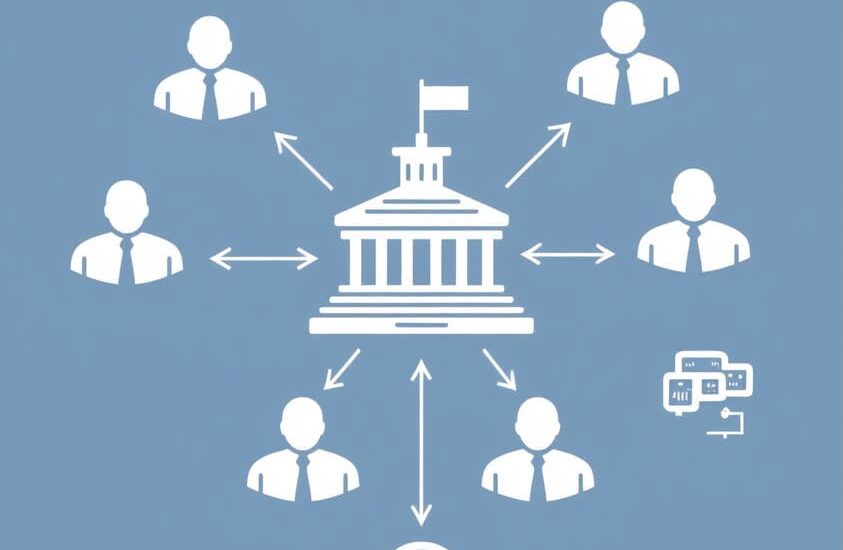
 Political sociology and power economy explain how markets, class, and institutions quietly shape who really holds power in society and government today. Last year I was sitting in an undergrad seminar, half-paying attention, when a professor said something that stuck with me way longer than I expected. She said power does not just sit inside government buildings; it moves through markets, families, workplaces, and even casual conversations at the dinner table. That idea kind of rattled around in my head for a long time, and honestly, it is a big part of why I still find political sociology so interesting today. This field, sometimes described through the lens of power economy, tries to explain how political authority and economic structures get tangled up together, and why that tangle affects almost everything in daily life.
Political sociology, at its core, looks at the relationship between society and political power. It is not just about elections or presidents or policy debates, though those things matter too. It is about who holds influence, who gets left out, and how those patterns get built into institutions over time. Power economy fits into this conversation because economic systems are never neutral. Markets are shaped by rules, and rules are shaped by people who already have some kind of advantage. So when we talk about capitalism, socialism, or any hybrid system in between, we are really talking about how power gets distributed, protected, or challenged.
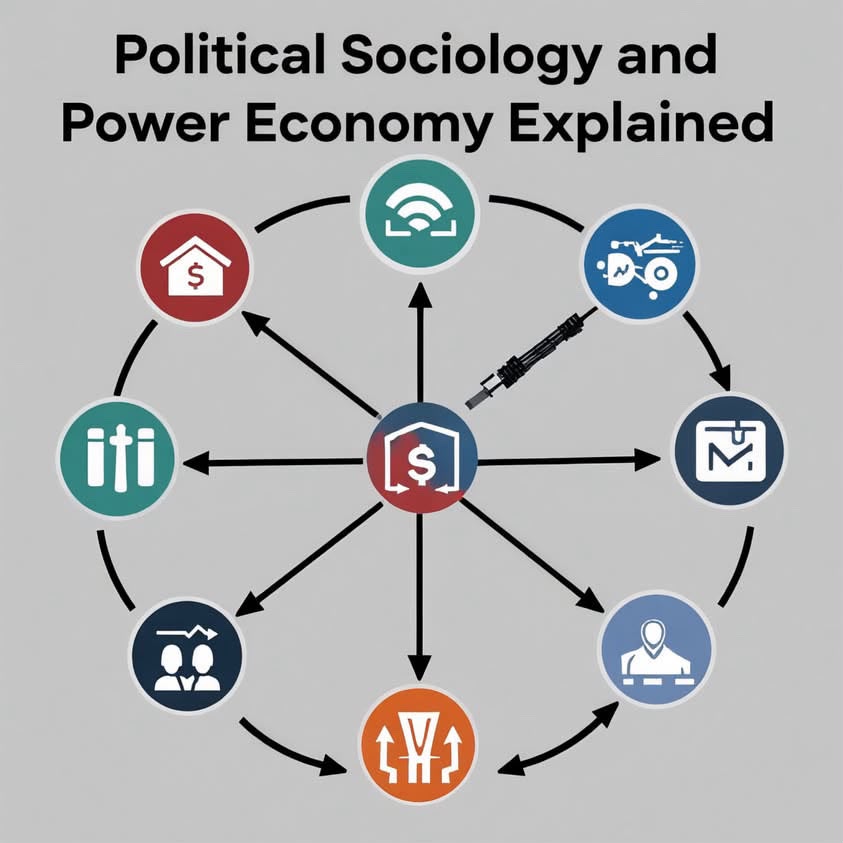
Why does this matter to regular people who are not political scientists or economists? Well, think about your own life for a second. Have you ever wondered why certain neighborhoods get better infrastructure than others, or why some industries seem to get bailed out while others are left to struggle? That is political sociology in action, whether we label it that way or not. The economy does not float above society like some abstract cloud. It is shaped by decisions, lobbying, historical inequalities, and yes, sheer luck of geography and timing.
One thing I find fascinating, and slightly frustrating if I am being honest, is how often people separate politics from economics as if they are two totally different worlds. They are not. Max Weber wrote about this a long time ago, describing how bureaucracy and rational authority became the backbone of modern states, and how that authority always carries economic weight. Karl Marx, obviously, pushed this even further, arguing that the economic base of a society basically determines its political superstructure. I do not agree with every conclusion Marx reached, but the basic observation that economic interests shape political outcomes still holds up remarkably well.
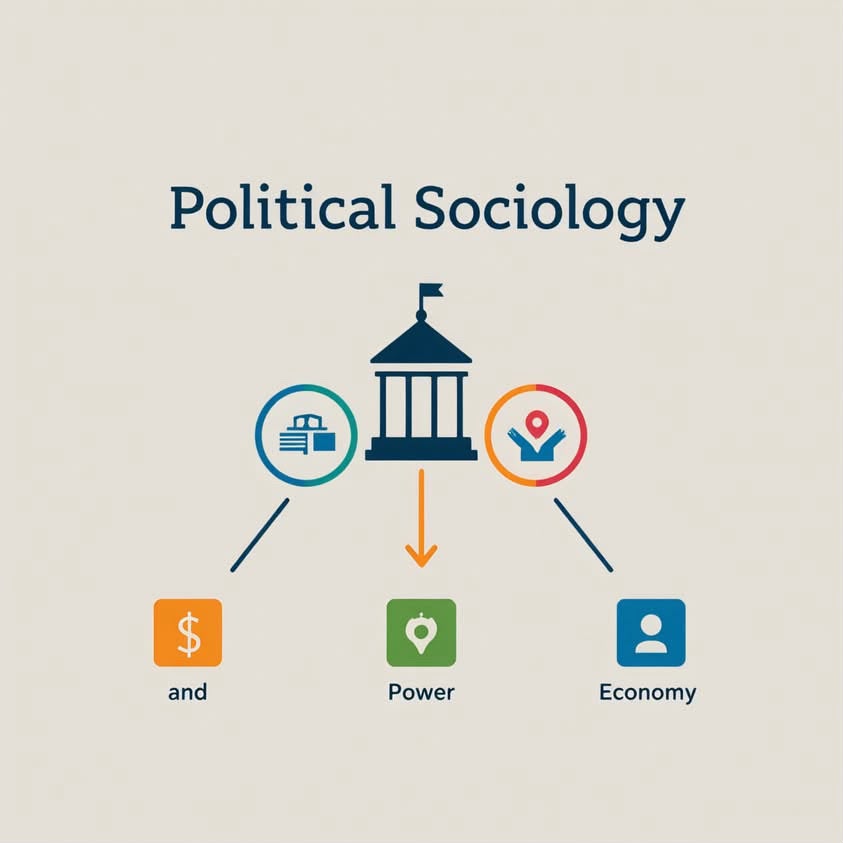
Consider the modern conversation around wealth inequality. Political sociology helps explain why tax policy, labor rights, and corporate regulation are not simply technical economic questions. They are deeply political questions about whose interests get prioritized. A power economy framework asks us to look at who benefits when certain policies pass and who tends to lose out, generation after generation. It is not a conspiracy theory kind of thinking, more like a pattern recognition exercise. Patterns repeat because institutions reward certain behaviors and punish others.
I think about my own hometown sometimes, a mid sized place that used to depend heavily on manufacturing. When factories left, the political conversation shifted almost overnight. Suddenly there was talk of retraining programs, tax incentives for new industries, and debates over trade policy that most people barely paid attention to before. That is the power economy at work, showing how economic shifts ripple into political priorities, and how political priorities then reshape the economy again. It is a loop, not a straight line.
Globalization adds another layer to all this, does it not? National governments increasingly compete with multinational corporations for influence, and sometimes it feels like the corporations are winning. Political sociologists study how transnational economic actors, like large tech companies or investment funds, shape domestic policy even without holding any formal political office. That is a strange kind of power, quiet but incredibly effective, and it forces us to rethink older ideas about where political authority actually lives.
Social class still matters enormously in this whole discussion, maybe more than some modern commentary gives it credit for. Class is not just about income level, it is about access, networks, and the ability to shape narratives. People with economic power often have disproportionate access to media, legal resources, and political candidates. That access compounds over time, creating cycles that are genuinely hard to break. I am not saying individual effort does not matter, it clearly does, but pretending the playing field is level ignores decades of sociological research.
So where does this leave us? I think political sociology and power economy together give us a more honest lens for understanding society, one that resists the temptation to treat politics and economics as separate silos. They are woven together, sometimes messily, sometimes intentionally, and untangling that mess is part of what makes this field worth studying. Next time you read a headline about a new economic policy or a political scandal, it might be worth pausing and asking who actually holds the power here, and how did they get it. That question alone can change the way you see the world, at least it did for me.
Reference
OECD. (2018). The role and design of net wealth taxes in the OECD (OECD Tax Policy Studies No. 26). OECD Publishing. https://doi.org/10.1787/9789264290303-en
OECD. (2024). Taxation and inequality. OECD Publishing. https://www.oecd.org/en/publications/taxation-and-inequality_8dbf9a62-en.html
Onishi, H. (2015). Superstructure determined by base. World Review of Political Economy, 6(1), 75–93. https://www.jstor.org/stable/10.13169/worlrevipoliecon.6.1.0075