
 Posted by
 Explore the sociology of foodways, food inequality, and why what we eat says more than we think. Every time I sit down to eat, I am doing far more than just feeding myself. I am participating in something much older and far more layered than I often stop to appreciate.
Food sociology the academic study of how food intersects with culture, identity, class, and power has a way of turning ordinary meals into a kind of living archive. And once you start seeing food through that lens, it is genuinely hard to unsee it.
I first stumbled into thinking about the sociology of food during a family dinner years ago. My grandmother had made jollof rice the way she always did the scorched bottom, the smoky aroma that filled the whole house, the argument over whether it needed more pepper.
What struck me that evening was not just the taste but the weight of it. The recipe had crossed borders. It had survived migration. It carried memory. That pot of rice was not just dinner. It was a cultural text, and food sociologists would absolutely have a field day with it.
Foodways a term that captures the entire web of practices, beliefs, and traditions surrounding what a group of people eat and how they eat it sit right at the heart of cultural identity. Roland Barthes wrote about food as a system of communication decades ago, and he was onto something profound.
What we choose to eat, how we prepare it, who we eat it with, and even which foods we consider acceptable or taboo all say something about who we are and where we belong. Food consumption is never purely individual. It is always social.
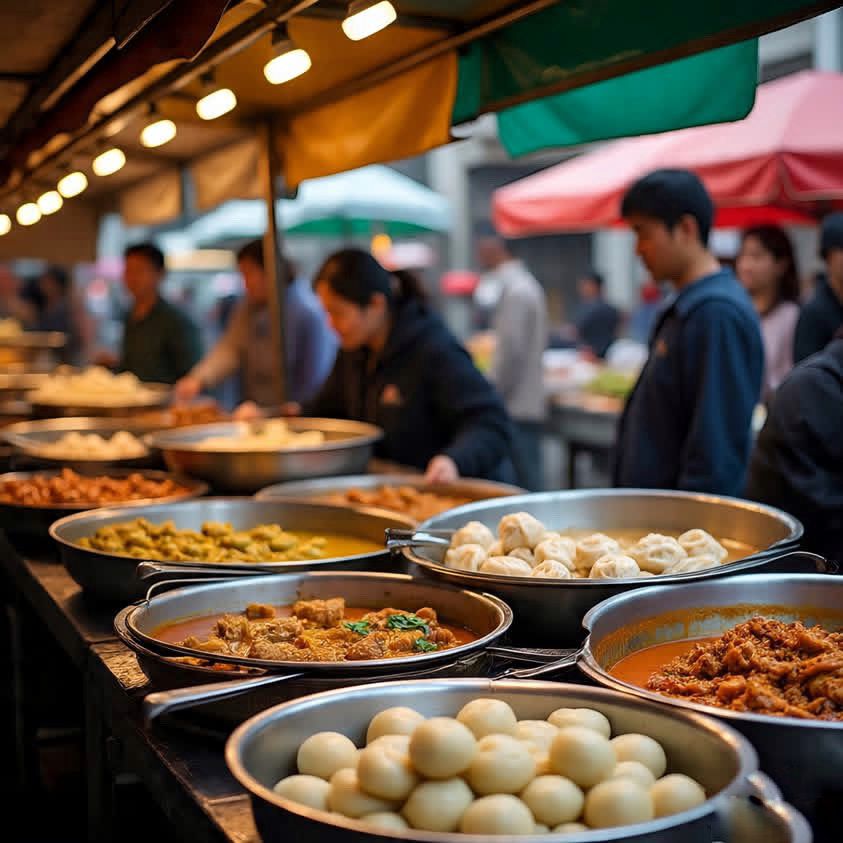
Think about how powerfully food marks group membership. The sociology of food and culture reveals that shared eating practices are among the most durable markers of ethnic, religious, and regional identity. Halal and kosher dietary laws do not just govern what goes into the body they signal belonging, express devotion, and create community boundaries.
Southern barbecue traditions in the United States carry entire histories of Black labor, cultural creativity, and regional pride. The fact that these foodways get contested, appropriated, and commodified is itself a sociological story worth telling.
Class and food inequality are another thread running through this whole conversation. Pierre Bourdieu’s concept of cultural capital applies to food just as much as it does to art or education. What you eat, where you shop, how you talk about food all of this functions as a kind of social currency. Organic grocery stores, farm to table restaurants, and artisanal sourdough are not just food trends.
They are class performances. And on the other side of that equation, food deserts urban and rural areas where access to fresh, affordable, nutritious food is severely limited expose the brutal intersection of race, poverty, and food systems in ways that demand sociological attention.
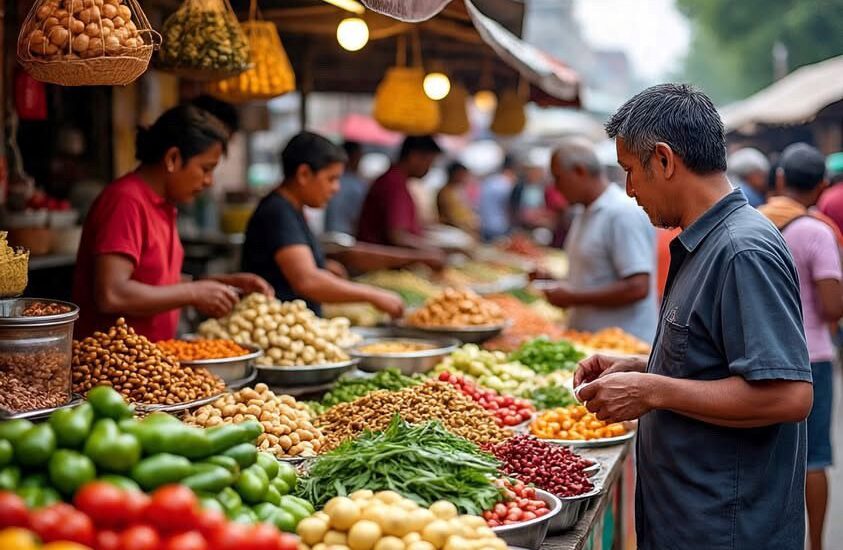
I find myself thinking about this every time I walk through a farmers market. Who is shopping there? Who can afford to shop there? Food access and food justice movements have pushed sociologists to look beyond what people eat and ask why structural barriers make certain diets impossible for certain communities.
The sociology of food inequality is not abstract it plays out in life expectancy data, in childhood nutrition outcomes, in the chronic disease rates that track almost perfectly along racial and economic lines. Gender is woven through foodways in ways that are sometimes obvious and sometimes startlingly subtle. The historical association of women with cooking and domestic food labor has been a site of feminist analysis for decades.
Who cooks and who gets credit for cooking are different questions, and they have different answers depending on whether we are talking about the home kitchen or the professional one. Why is it that home cooking has been coded as women’s unpaid labor while the world’s most celebrated chefs have historically been men? The sociology of food and gender does not let that contradiction slide.
Globalization has done something complicated to foodways. On one hand, it has created extraordinary cross-cultural exchange the kind that gives us Korean tacos, Japanese-Peruvian fusion, and Ethiopian restaurants in small Midwestern cities.
On the other hand, it has accelerated the homogenization of food cultures, threatening regional food traditions and creating new forms of culinary imperialism where the flavors of economically dominant cultures crowd out local ones. Food sociologists are rightly curious about who benefits when a cuisine travels and who loses something in the process.
There is also the question of how food media and technology are reshaping foodways in real time. Social media platforms have turned eating into a performance and a spectacle. The ritual of photographing a meal before eating it is now so normalized that it barely registers as strange.
Yet from a sociological standpoint, it is fascinating food consumption has become content production, and the audience now shapes what gets cooked, what gets shared, what gets valorized. Food culture in the digital age is a field that food sociologists are scrambling to theorize, and honestly, the conversations happening there are some of the most interesting in the discipline right now.
Reference
Barthes, R. (1997). Toward a psychosociology of contemporary food consumption. In C. Counihan & P. Van Esterik (Eds.), Food and culture: A reader (pp. 20–27). Routledge.
Bourdieu, P. (1984). Distinction: A social critique of the judgement of taste. Harvard University Press.
Counihan, C., & Van Esterik, P. (Eds.). (2013). Food and culture: A reader (3rd ed.). Routledge.