
 Posted by
 I will never forget sitting in my parents’ living room during the 2008 financial crisis. One relative was glued to a certain news channel, convinced the sky was falling in one particular way. Another was watching a different network, equally certain the catastrophe was unfolding in a completely different manner. It was the same historic event, yet we seemed to be living in two separate realities.
That was the moment the curtain pulled back for me. I realized mass media was not just reporting the world. In many ways, it was busy building the world each of us perceived. I have been turning that idea over in my head ever since. Today, the influence of mass media and communication is more pervasive than ever, yet somehow more invisible. Think about your own day. You likely wake up to a news alert, scroll through social media over coffee, and maybe listen to a podcast on your commute.
This stream of information is not just background noise. It is the raw material from which we construct our understanding of everything beyond our front door, our politics, our culture, even our own identities. We are constantly immersed in a mediated communication environment, and it is high time we talked about what that really means. For most of the last century, the model was simple and one-sided.
Big institutions, television networks, radio stations, and major newspapers broadcast messages to a vast, relatively passive audience. Think of Walter Cronkite’s famous sign-off, “And that’s the way it is.” Back then, with few alternatives, millions of people simply accepted that it was. The role of the media was clear: a few gatekeepers decided what was important, and the public largely listened. But then the internet happened, and turned that whole model on its head. The tools of mass communication exploded out of corporate studios and into our pockets.
Now, anyone with a smartphone and a hot take can theoretically reach millions. It is a dizzying shift. Does my aunt’s viral Facebook rant about local politics make her part of the mass media? In a sense, yes. We have all become potential broadcasters, blurring the line between producer and consumer in a way that would have given old-school theorists a headache. Here is the catch, though, and it is a big one: while the gates are open, the megaphones are not handed out equally. We have traded editorial gatekeepers for algorithmic ones.
A teenager’s dance video on TikTok can indeed garner more views than a local news broadcast, but it is a platform’s secret sauce of code that decides who sees it. The power has not vanished. It has just become more distributed, and in some ways, more opaque. This is the crucial evolution of the media we are all living through. This shift has fundamentally changed how media function in our society. Traditional media had clear jobs: to inform, to set the public agenda, and to create shared cultural moments. Those functions still exist, but they are behaving very strangely in our new, fragmented world.
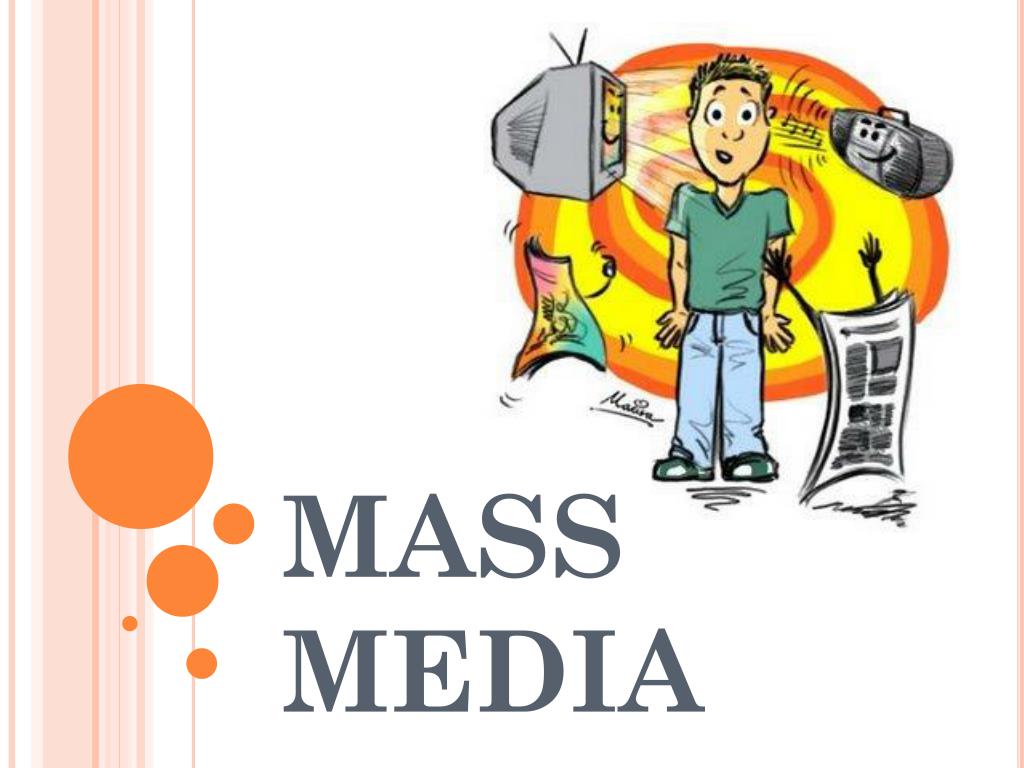
Take agenda-setting. Scholars like Maxwell McCombs showed that the media might not tell you what to think, but it was incredibly effective at telling you what to think about. When three networks dominated, we all worried about the same handful of issues each night. Now? My social media feed, shaped by my clicks and likes, might be obsessed with one crisis. Yours might be focused on another entirely.
How does a democracy even function when we cannot agree on what problems are real? This is the core challenge of modern media influence. This splintering, this erosion of a common information ground, is perhaps the most significant impact of media on our society today. The problem is compounded by the wildfire spread of misinformation. The old gatekeepers, for all their flaws, had professional standards and fact-checkers. Now, the emotional, the outrageous, and the flat-out false often travel faster and farther than a careful correction.
Bad actors have become masterful at exploiting this, weaponizing our cognitive biases. It is exhausting, and it makes the simple act of staying informed feel like a full-time job. Before we get too cynical, let us pause. Because of all these very real challenges, I am actually cautiously hopeful. This messy new world has a profound upside: democratization. For decades, mainstream media narratives left so many stories untold and so many voices on the margins. Modern mass communication tools have changed that.
Powerful social movements like Black Lives Matter grew in part because activists could bypass traditional media and speak directly to the world, sharing unfiltered experiences and organizing in real-time. Communities that were historically ignored can now build their own networks, share their own stories, and challenge dominant narratives on their own terms. That is not a small thing. It is a tectonic shift in who gets to participate in the conversation. This power of communication to empower is the flip side of its power to mislead.
So, where does this leave us? The future of mass media and communication will be defined by this ongoing tug-of-war: democratization versus manipulation, connection versus fragmentation. We are not going back to the age of three television networks, nor should we romanticize it. That model had its own deep flaws and exclusions.
The task now is to build new reflexes and new understandings. We need to cultivate a sharper media literacy, one that teaches us not just to consume information, but to dissect it to ask who benefits from a story, what is not being said, and how an algorithm might be shaping our view. We also need to support the institutions, old and new, that are committed to ethical journalism and truthful storytelling in this chaotic landscape.
Ultimately, understanding mass media is not academic. It is a survival skill for the 21st century. It shapes the reality we agree to live in, and we owe it to ourselves to pay attention to the builders. The quality of our public discourse, our shared truth, and our very communities depend on it. Let us try to be more than just an audience. Let us become thoughtful critics and conscious participants instead. For a deeper dive into the foundational theories of how the media sets our agenda, I always find myself returning to the pioneering work of Maxwell McCombs.
References
McCombs, M. E., & Shaw, D. L. (1972). The agenda-setting function of mass media. Public Opinion Quarterly, 36(2), 176-187. https://academic.oup.com/poq/article-abstract/36/2/176/1853310
Castells, M. (2009). Communication Power. Oxford University Press. https://global.oup.com/academic/product/communication-power-9780199681938
Bennett, W. L., & Livingston, S. (2018). The disinformation order: Disruptive communication and the decline of democratic institutions. European Journal of Communication, 33(2), 122-139. https://journals.sagepub.com/doi/abs/10.1177/0267323118760317
Benkler, Y., Faris, R., & Roberts, H. (2018). Network Propaganda: Manipulation, Disinformation, and Radicalization in American Politics. Oxford University Press. https://academic.oup.com/book/26406