
 Posted by
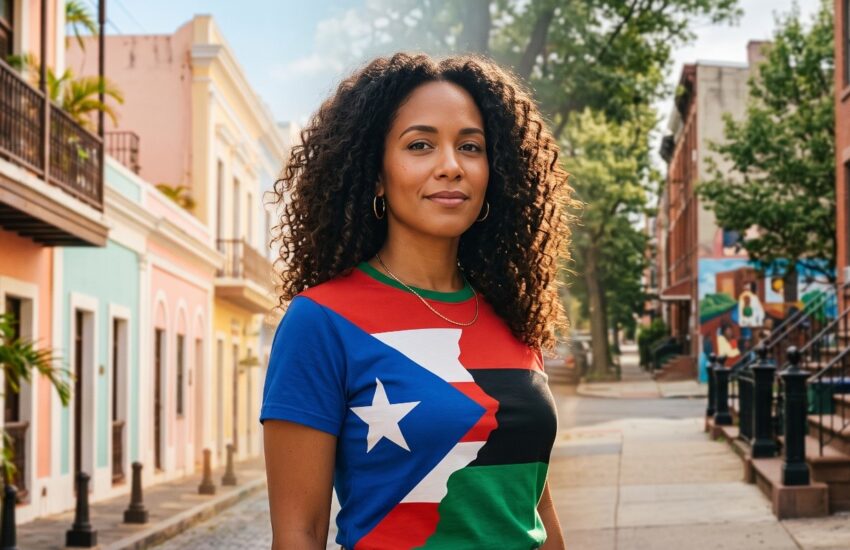
 I learned I was Black in the United States. I learned I was Latino in my grandmother’s kitchen in Puerto Rico. In one world, my skin color defined me before I opened my mouth. In the other, my language and my culture were the entry point. It took me years to understand that I was not one or the other. I was both. And the world was not built to hold both.
The term Afro-Latinx describes people of African descent from Latin America and the Spanish-speaking Caribbean. We are Puerto Rican, Dominican, Cuban, Colombian, Panamanian, Brazilian, and more. We are the descendants of enslaved Africans brought to the Americas by European colonizers. We carry that history in our skin, our hair, our music, our food, and our faith. But our Blackness is often invisible in Latino spaces, and our Latinidad is often questioned in Black spaces. We live in the hyphen, and sometimes the hyphen feels like a tightrope.
The first lesson I learned is that Latinidad is not a race. It is an ethnicity, a cultural and linguistic identity. Latin America is one of the most racially diverse regions in the world. It includes Indigenous peoples, Europeans, Africans, Asians, and every mixture in between. But many Latin American countries have promoted a myth of racial democracy, the idea that we are all mixed and therefore racism does not exist. That myth is a lie. It hides the anti-Blackness that runs deep in our families, our media, our institutions, and our own mirrors.
I grew up hearing family members tell me to “mejorar la raza,” to improve the race by marrying someone lighter. I grew up watching telenovelas where the darkest-skinned actors were always the maids or the villains. I grew up being told my hair was “pelo malo,” bad hair, that needed to be relaxed and tamed. These messages were not random. They were the legacy of colonialism, and they taught me to hate parts of myself before I even knew who I was.
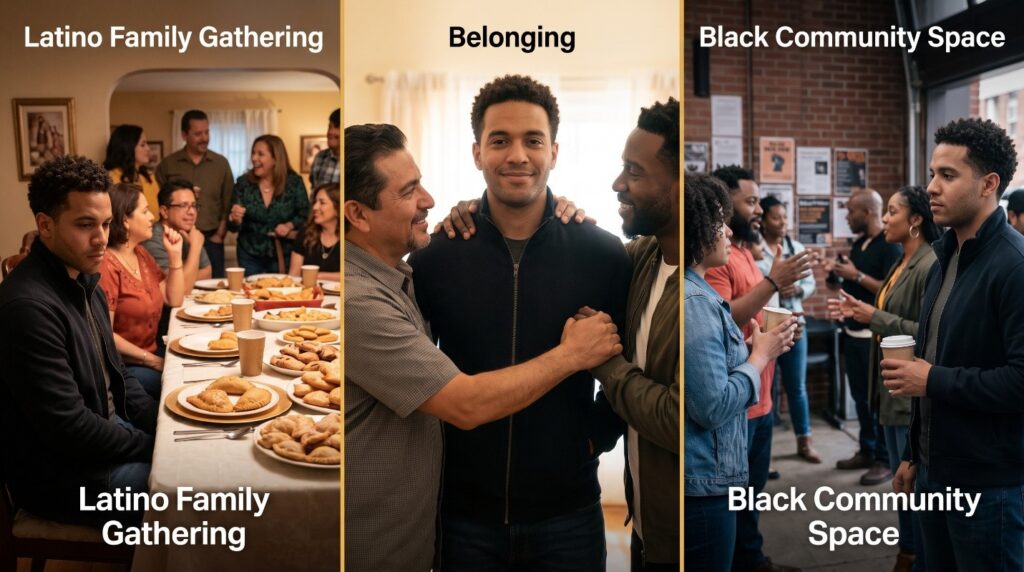
The second lesson I learned is that anti-Blackness is not just a white problem. It exists within Latino communities too. Afro-Latinx people are disproportionately poor, less likely to complete college, and more likely to be stopped by police. We are underrepresented in leadership, in media, and in the stories our communities tell about themselves. When we raise these issues, we are often accused of dividing the community. But naming the problem is not dividing. It is the first step toward healing it.
At the same time, I have found deep belonging in Black spaces. African American culture gave me language for my experience. It gave me heroes and role models. It gave me a sense of shared struggle and shared joy. But even there, I sometimes felt like I had to prove my Blackness. I spoke Spanish at home. I ate arroz con gandules. I danced salsa and merengue. Some people questioned whether I was “really” Black. The truth is, I am Black in a way that is shaped by my Latinidad. I am not less Black because I am Latino. I am Black and Latino at the same time.
The third lesson I learned is that our dual identity is not a burden. It is a gift. Afro-Latinx culture is one of the richest in the world. It gave us bomba and plena, son cubano, mambo, and salsa. It gave us writers like Nicolás Guillén and Piri Thomas. It gave us artists, activists, and leaders who fought for justice on multiple fronts. When we claim both parts of ourselves, we are not confused. We are whole.
I no longer try to make myself small enough to fit into someone else’s box. I do not lighten my skin. I do not straighten my hair to be acceptable. I do not quiet my Spanish when I am in Black spaces or hide my Blackness when I am in Latino spaces. I take up all the room I need. I am Afro-Latinx. I am Black. I am Latino. I am home in my own skin.
References
Jiménez Román, M., & Flores, J. (Eds.). (2010). *The Afro-Latin@ reader: History and culture in the United States*. Duke University Press. [https://www.dukeupress.edu/the-afro-latin-reader](https://www.dukeupress.edu/the-afro-latin-reader)
2. Masiki, T. (2023). *The Afro-Latino memoir: Race, ethnicity, and literary interculturalism*. University of North Carolina Press. [https://academic.oup.com/north-carolina-scholarship-online/book/59204](https://academic.oup.com/north-carolina-scholarship-online/book/59204)
3. García-Louis, C., & Cortes, L. (2020). Navigating Blackness and Latinidad: Afro-Latinx students’ experiences in higher education. *Journal of Latinos and Education*.
4. Latino Policy & Politics Institute. (2023). *Centering Black Latinidad: An analysis of Afro-Latinxs in the United States*. UCLA. [https://latino.ucla.edu/research/centering-black-latinidad/](https://latino.ucla.edu/research/centering-black-latinidad/)
5. Borrell, L. N. (2005). Racial identity among Hispanics: Implications for health and well-being. *American Journal of Public Health, 95*(3), 378–381.