
 Posted by
 One day, I found myself standing in front of my closet one morning, genuinely paralyzed by a decision that, on the surface, seemed completely trivial. Was it the navy blazer or the worn leather jacket? The choice felt loaded in a way I could not fully explain at the time.
Years later, after falling headfirst into reading about the sociology of fashion and dress, I finally understood what was happening in that moment. I was not just picking clothes. I was negotiating identity. Explore how the sociology of fashion and dress shapes identity, class, and power, and what your clothing choices say about you and society.
The sociology of fashion and dress is a field that examines clothing not merely as fabric and thread but as a deeply embedded social language. Scholars in this space argue that what we wear communicates our class, our values, our aspirations, and even our rebellions.
Georg Simmel, one of the earliest thinkers to take fashion seriously as a sociological subject, described it as a mechanism of both social conformity and individual differentiation. You wear what your group wears to signal belonging, and then you tweak it just enough to say something about yourself. That tension between fitting in and standing out is at the absolute heart of dress as a social phenomenon.
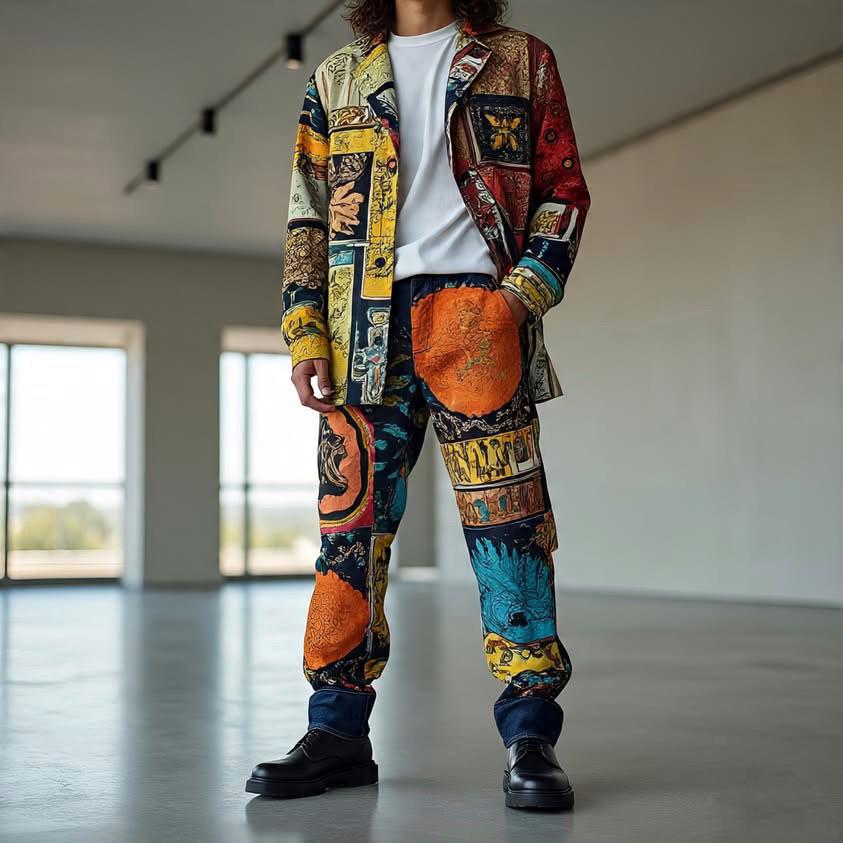
Think about what happens on the first day of a new job. Most people put enormous thought into that outfit. Why? Because clothing functions as a nonverbal resume of sorts, signaling competence, cultural literacy, and social awareness before a single word is spoken. The sociology of dress reveals that these signals are rarely random.
They are shaped by systems of power, historical precedent, and what Pierre Bourdieu called “cultural capital,” the idea that certain tastes and styles carry more social weight depending on the context you inhabit. A tailored suit reads differently in a corporate boardroom than it does at an art collective, and both wearers understand this intuitively, even if they have never cracked open a sociology textbook.
Fashion and dress also intersect powerfully with identity construction. For many people, myself included, looking back at various phases of my wardrobe, clothing is one of the primary tools through which we experiment with and perform identity. Sociologist Erving Goffman’s concept of “impression management” is almost tailor-made for this conversation. We curate our appearance the way a director curates a stage, making deliberate choices about what we want audiences to perceive. This is not vanity. It is a fundamentally human act of communication.

The sociology of fashion also forces us to reckon with inequality. Access to certain types of dress is never democratically distributed. Fast fashion has made certain trends broadly available, yes, but the deeper codes of class-based dressing remain surprisingly intact.
A study of dress codes in professional environments, for instance, often reveals how dominant cultural norms usually rooted in white, Western, middle-class aesthetics set the standard for what counts as “appropriate.” Natural hairstyles, traditional garments, and subcultural aesthetics have all historically been policed in ways that reflect the politics of dress far more than any individual employer’s preferences.
What strikes me most about the sociology of dress is how it makes visible the invisible. I grew up watching my grandmother carefully select her church clothes every Sunday morning: the hat, the gloves, the particular cut of her coat. As a child, I thought it was a ritual for its own sake. Now I understand that those choices were a form of dignity, a social statement, and a reclamation of respectability in a world that did not always extend it freely. Fashion and clothing carry that kind of weight for a lot of people, even when the culture at large dismisses it as superficial.
Subcultures offer some of the richest evidence of clothing as social resistance. From the zoot suit wearers of the 1940s to the punk movement of the 1970s to today’s streetwear communities, dress has consistently been used to push back against mainstream norms and construct alternative social worlds.
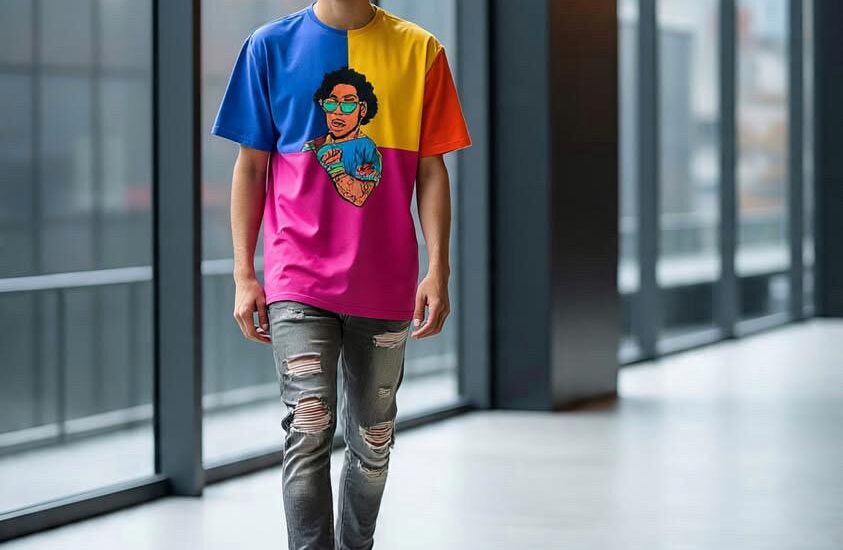
Dick Hebdige’s classic analysis of subculture showed that style is not just decoration but a form of bricolage, taking existing symbols and reassembling them into new meanings that challenge the dominant order. When you look at fashion through that lens, a pair of ripped jeans is suddenly a lot more interesting than it first appears.
The globalization of fashion adds yet another dimension to this conversation. The sociology of dress now has to grapple with questions of cultural appropriation, cross-cultural influence, and what it means when styles travel far from their origins and get stripped of their social context. A sacred garment worn as a Halloween costume, a traditional textile pattern printed on mass-market accessories, these are not just aesthetic choices. They are social acts with real consequences for the communities whose material culture is being borrowed, often without credit or compensation.
Reference
Bourdieu, P. (1984). Distinction: A social critique of the judgement of taste. Harvard University Press.
Crane, D. (2000). Fashion and its social agendas: Class, gender, and identity in clothing. University of Chicago Press.
Davis, F. (1992). Fashion, culture, and identity. University of Chicago Press.