
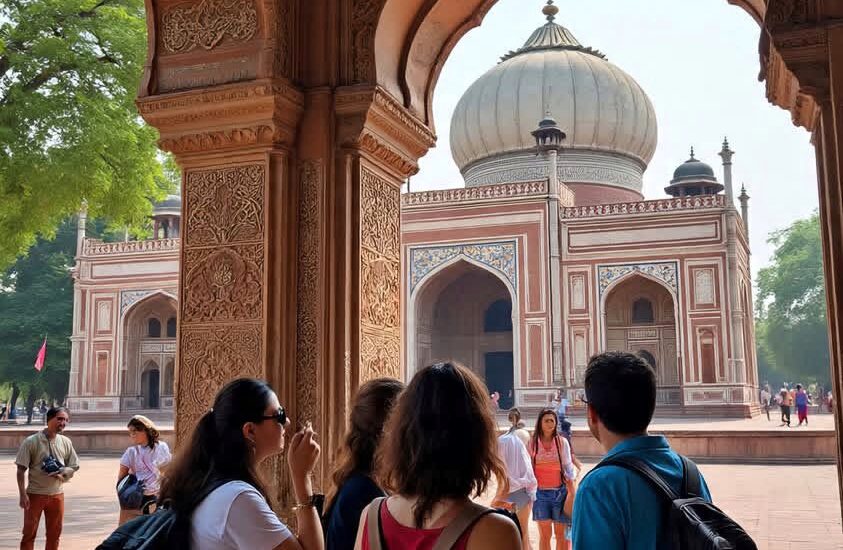
 Posted by
 Explore how the sociology of tourism and heritage reveals why we travel, how collective memory shapes destinations, and what cultural identity means in a globalized world. Every time I step off a plane in a new city, I find myself doing something I cannot quite explain. I look for the oldest building I can find. Not the tallest, not the newest, not the most Instagrammed.
The oldest. Maybe it is because I grew up in a small town where the local historical society practically ran the social calendar, or maybe it is something deeper, something wired into the way human beings move through space and time. Whatever the reason, I have spent a good chunk of my adult life thinking about why people travel and what they are really looking for when they get there. Turns out, sociology has a lot to say about it.
The sociology of tourism is not just about where people go on vacation. It is about what travel means, who gets to define a destination’s identity, and how tourism shapes communities in ways that are both thrilling and, if we are honest, deeply complicated. John Urry’s concept of the “tourist gaze” changed how I think about this. The idea is that tourists do not just look at things; they look for specific things based on expectations built by media, travel guides, and cultural narratives. We arrive somewhere already knowing what we are supposed to see. That is a strange kind of experience when you stop and think about it.
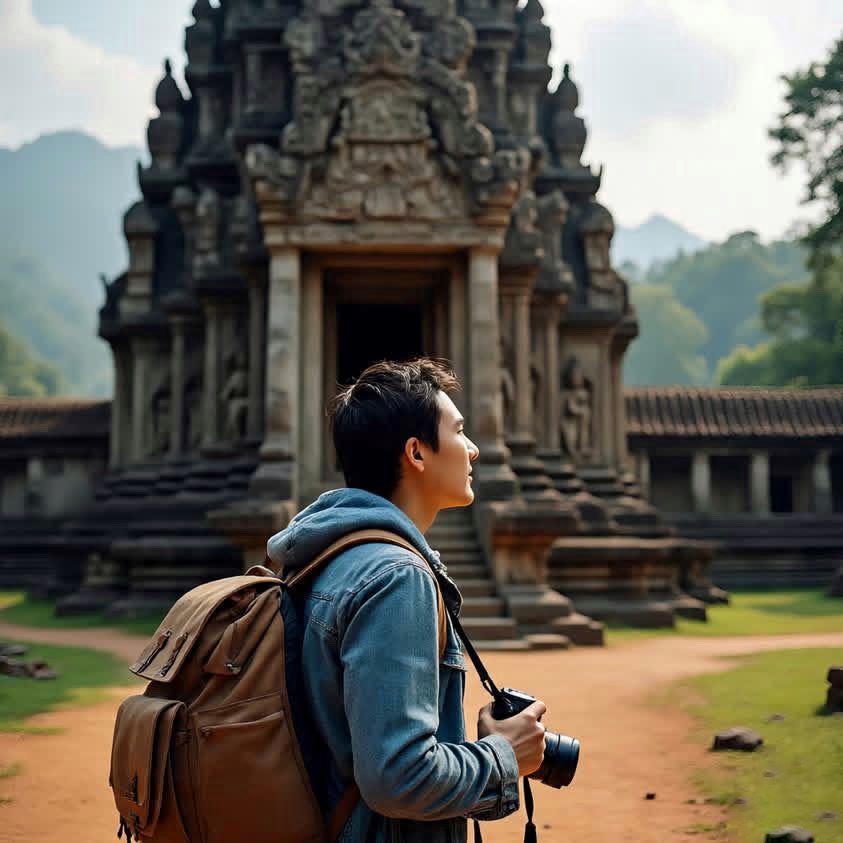
Heritage tourism, in particular, sits at this uncomfortable intersection of authenticity and performance. When I visited a colonial-era district in a major city last spring, I was struck by how carefully everything was arranged for consumption. The cobblestones were just uneven enough to feel historic but smooth enough not to trip on. The vendors sold “traditional” goods that were manufactured three cities over.
I felt both enchanted and slightly manipulated. That tension between the real and the staged is exactly what sociologists like Dean MacCannell explored when he wrote about the “staged authenticity” of tourist experiences. We seek the genuine article while the tourism industry constructs a version of it that is palatable and profitable.
Cultural heritage and collective memory are inseparable in this equation. Communities do not just preserve old buildings because they are pretty. Heritage sites are repositories of group identity, markers that say something important about who a people are and where they came from.
The sociological concept of collective memory, developed most famously by Maurice Halbwachs, helps explain why heritage tourism carries such emotional weight. When people travel to ancestral homelands, civil rights landmarks, or sites of historical trauma, they are participating in a form of social remembering. The trip is not just personal; it is communal.
What I find endlessly fascinating is the power dynamic embedded in heritage designation. Who decides what gets preserved and what gets demolished? Who gets to tell the story of a place? These are not neutral decisions. UNESCO World Heritage Sites, for all their prestige, reflect particular global hierarchies about whose history matters most.
Indigenous communities around the world have long argued that heritage tourism can commodify their cultures without meaningfully involving them in the decisions or the profits. The sociology of tourism forces us to ask uncomfortable questions about representation, authority, and whose version of the past we are actually visiting.
Tourism also does something peculiar to local identity. On one hand, it creates economic incentives to preserve cultural practices, languages, and architectural traditions that might otherwise disappear. On the other hand, it can hollow those things out, turning living culture into spectacle. I have seen this play out in small towns that became trendy destinations almost overnight.
Within a few years, the original residents are priced out, the local character that attracted tourists in the first place is replaced by boutique hotels and artisan coffee shops, and the place becomes a copy of itself. Sociologists call some version of this process “touristification,” and it is genuinely difficult to watch.
Global tourism flows also reinforce and sometimes challenge social inequalities. Wealthy tourists from the Global North traveling to destinations in the Global South reproduce colonial-era dynamics in ways that are worth sitting with.
The hospitality worker serving drinks at a resort may earn in a month what the guest spends in a day. Heritage tourism, when done thoughtfully, can push back against this by centering local voices and redirecting economic benefits toward communities. But that requires intentionality and structural change, not just a few feel-good travel blogs.
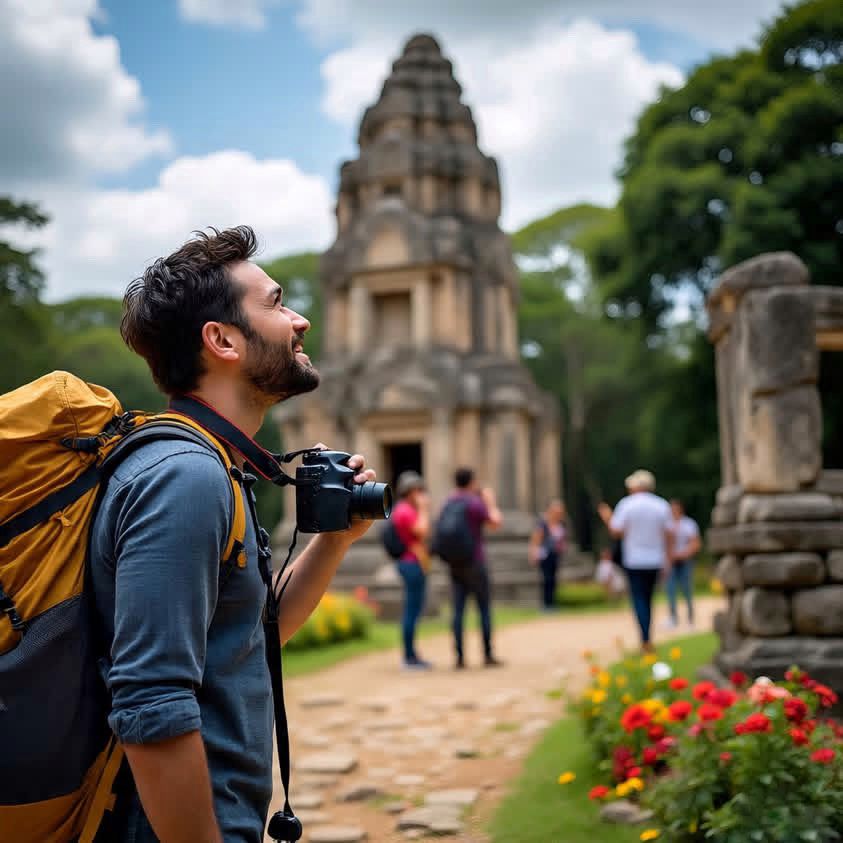
I keep coming back to the question of what travel is actually for. The sociological literature suggests it is rarely just about leisure. People travel to construct and affirm their identities, to accumulate cultural capital, to connect with history, to experience difference, and yes, sometimes to escape the relentless demands of ordinary life.
Heritage sites give us the sense of touching something larger than ourselves. That is not a small thing. The sociology of tourism and heritage reminds us that travel is a social act, embedded in history and power, and that how we move through the world says a great deal about who we think we are and who we want to become.
References
MacCannell, D. (1973). Staged authenticity: Arrangements of social space in tourist settings. American Journal of Sociology, 79(3), 589–603. https://doi.org/10.1086/225585
Halbwachs, M. (1992). Was(L. A. Coser, Trans.). University of Chicago Press.
Urry, J. (1990). The tourist gaze: Leisure and travel in contemporary societies. Sage Publications.