

 Posted by
 I have spent over a decade working in and around nonprofit organizations, and there is this comfortable story we tell ourselves about them. Nonprofits exist to help people. They are driven by mission rather than profit. They somehow sit above the messiness of economic inequality. It is such a reassuring narrative, isn’t it? The problem is, it is also incomplete.
I have watched social class shape nonprofit organizations in ways that are rarely discussed openly, and understanding those dynamics matters if we actually want these organizations to do what they claim they want to do. Let me start with leadership, because this is where things get uncomfortable pretty quickly. The nonprofit sector has a well-documented diversity problem, but the class dimension often gets far less attention than race or gender.
Executive directors, board members, and senior leadership tend to be drawn from educated, professional, and relatively affluent backgrounds. I remember sitting in a conference room years ago listening to a group of nonprofit leaders discuss poverty alleviation strategies, and it struck me that not one person in that room had ever actually experienced poverty. Not one.
This is not particularly surprising when you think about it. Running a nonprofit requires access to professional networks, advanced degrees, and often the ability to survive on below-market salaries during those early career years. Those are conditions that disproportionately favor people who already have financial cushions, maybe some family support, maybe no student loans weighing them down.
The result, whether we want to admit it or not, is organizations that are structurally led by one class while ostensibly serving another. Understanding the complex relationship between social class and nonprofit leadership is essential for any organization truly committed to equity and meaningful community impact.
This gap between leadership and community creates real consequences that I have witnessed firsthand. When decision-makers have never personally experienced housing instability, food insecurity, or the particular soul-crushing stress of living paycheck to paycheck, it becomes genuinely harder to design programs that account for those realities.
I once watched a well-intentioned program manager design an application process for emergency rental assistance that required three separate forms, two in-person visits, and documentation that many tenants simply did not have. Was she being malicious? Absolutely not. She just could not see how her requirements created barriers because she had never been that person scrambling to keep a roof over their head.
Policies inevitably get written from the outside looking in. Application processes become more complicated than they need to be. Reporting requirements get layered onto recipients who are already stretched thin, already working two jobs, already navigating transportation challenges. None of this happens because nonprofit staff are bad people.
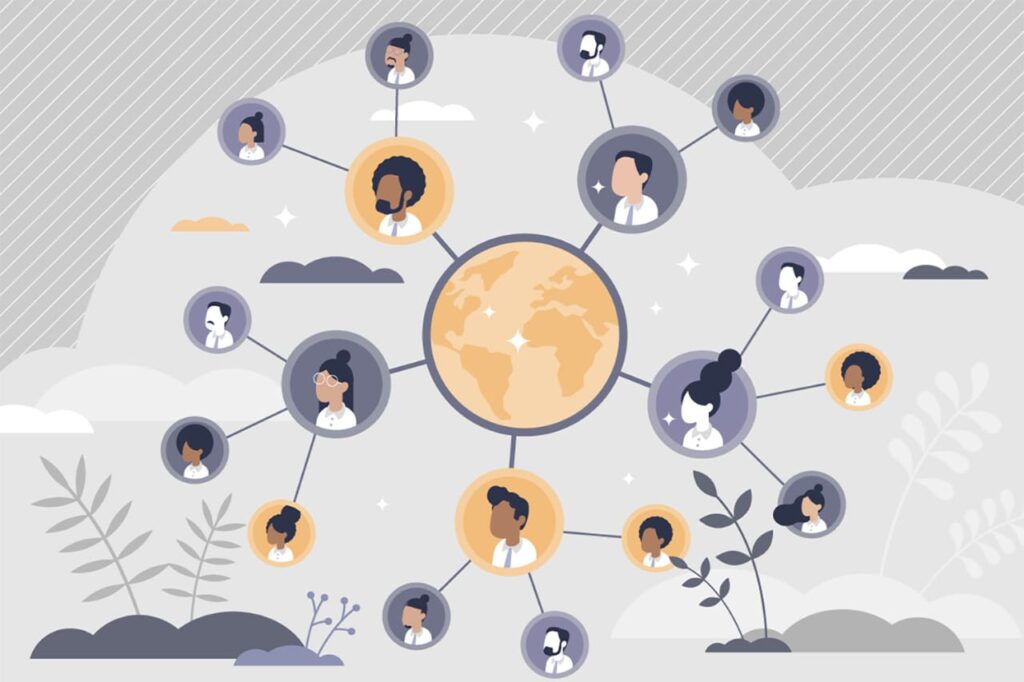
It happens because there is a fundamental class mismatch between the folks making decisions and the communities those decisions supposedly serve. Here is something else I have noticed over the years. The donor class really does compound this dynamic in ways that are rarely acknowledged. Major funders, foundations, corporate sponsors, and wealthy individual donors have enormous influence over which priorities get pursued and which get quietly dropped.
I have sat through too many strategic planning sessions where someone says, “The funders would never support that,” and everyone just nods, accepting that the people with money get to shape the work, even when their understanding of the community is limited. Research backs up what many of us have observed anecdotally. Donors tend to fund causes that feel legible and non-threatening to their own social position.
Direct service programs, food banks, and job training attract funding much more readily than advocacy or organizing work that might actually challenge the structural conditions producing inequality in the first place. It is easier to fund a food bank than to fund the policy work that would make food banks less necessary. There is also something worth examining in the everyday culture of many nonprofits, and this one hits close to home for me.
I grew up in a working-class family, the first to graduate college, and I remember feeling like an imposter for years in nonprofit spaces. The professional norms, the formal meeting structures, the preference for credentialed candidates, and the particular way people write emails and speak in meetings create environments where people from working-class or low-income backgrounds can feel unwelcome, even when the organization’s stated mission is to serve communities like the one I came from.
Scholars sometimes call this the hidden curriculum of organizational life, and it operates in nonprofits just as powerfully as it does in corporations. I have watched brilliant community organizers struggle in job interviews because they could not translate their lived experience into the language of logic models and outcome measurements. I have seen board meetings where working-class voices got talked over or dismissed as “not understanding the big picture.” None of this is deliberate exclusion, but it is exclusion nonetheless.
None of this means nonprofits are failing. I have worked with too many dedicated people and witnessed too many lives genuinely improved to make that claim. But I do believe a more honest accounting of how class operates within these organizations would lead to better outcomes. More participatory governance. Hiring processes that value lived experience alongside academic credentials. Funding models that actually center community voice rather than donor comfort.
The sector already knows how to talk about equity, and many organizations have done meaningful work around racial justice and gender inclusion. Extending that conversation to class feels like the next honest step. For a deeper dive into these dynamics, I recommend reading The Revolution Will Not Be Funded by INCITE!, which explores these questions in more detail. It might make you uncomfortable. It should. That discomfort is where real change starts.
References
Independent Sector. (2022). The state of the nonprofit workforce. https://independentsector.org/resource/the-state-of-the-nonprofit-workforce/
U.S. Bureau of Labor Statistics. (2023). Nonprofits account for 12.3 million jobs. https://www.bls.gov/opub/mlr/2023/article/nonprofits-account-for-12-point-3-million-jobs.htm
Themudo, N. S. (2013). Nonprofits and social class: Organizational theory meets inequality. Nonprofit and Voluntary Sector Quarterly, 42(1), 120–138.