
 Posted by
 I remember standing in a crowded conference hallway clutching a too-hot cup of coffee when another attendee asked what I studied. When I said sociology of language, she nodded knowingly and said, “Oh, so you study like, how people talk differently in different situations?” And I just stood there, stammering through something that probably sounded like I had no idea what I was talking about. Because no. That is not quite it.
But explaining the difference without sounding like I was splitting academic hairs? That took me years to figure out. Exploring how social structures influence communication patterns and language policies across communities, this article examines the sociology of language as a distinct field that analyzes society through linguistic behavior rather than treating language itself as the primary subject of investigation.
The truth is, many people use sociolinguistics and the sociology of language as if they are the same thing. I did too, once. But they are not. And the distinction matters more than you might think. It is not about being pedantic. It is about understanding two completely different ways of looking at the world.
Sociology of language flips the script entirely. Instead of asking what society does to language, it asks what language reveals about society. Instead of studying sounds and sentence structures, it studies power, inequality, institutions, and identity.
Language becomes the window rather than the subject. Joshua Fishman, who basically built the foundation for this field, described it as investigating who speaks what language to whom and when. But even that tidy definition undersells what is really happening here.
Let me give you an example that helped me finally untangle this in my own head. A sociolinguist might record dozens of conversations in a community, measure how often speakers drop their g’s in words like “running” versus “running,” and then map those speech patterns onto categories like class, age, or gender.
They are analyzing language itself and correlating it with social variables. That work is valuable. It tells us something about linguistic variation. But a sociologist of language? They would look at how that same community uses language requirements in hiring practices to quietly filter out certain applicants.
They would examine why a school board decides to fund Spanish bilingual programs in affluent neighborhoods while cutting them in working-class ones. They would study how language becomes a gatekeeping mechanism disguised as a neutral skill requirement.
The linguistic features themselves matter less than what people do with them socially. This is what I wish I could have explained to that woman in the hallway. Sociology of language operates at the macro level. It is not really about individual speech patterns at all. It is about census data that shows language distribution mapping onto redlined neighborhoods.
It is about language policies that determine which indigenous languages get taught in schools and which disappear from curricula entirely. It is about entire communities shifting from one language to another across generations, not because people wake up one day and decide to stop speaking their heritage language, but because economic pressures and institutional forces make that shift feel inevitable.
I grew up hearing stories about relatives who stopped speaking their parents’ native language because they were punished for it in school. That is not sociolinguistics. That is sociology of language. That is power operating through language policy, with consequences that ripple across decades.
One of the richest veins of research in this field examines language conflict and contact. When multiple languages exist in the same society, somebody gets to decide which ones count. Which languages are used in courtrooms, and hospitals, and government forms? Which languages help you get a job interview? Which languages signal sophistication versus ignorance? These are not linguistic questions.
They are social and political ones, dressed up in vocabulary and accent. Then there are language attitudes. This dimension of sociology of language still catches me off guard sometimes. The way people judge a particular dialect as “lazy” or “uneducated” tells you almost nothing about that dialect and almost everything about the social position of its speakers.
I have sat in rooms where otherwise thoughtful people described Appalachian English as “improper” while praising features of African American Vernacular English when used by white celebrities. Nobody said the quiet part aloud. They did not have to. The social hierarchy revealed itself through grammatical judgments. Sociology of language makes visible how inequality operates through something that seems neutral.
Language appears democratic. Everyone has one. Everyone uses it. But access to prestigious varieties, to standard dialects, to the linguistic capital that opens doors in education and employment, that access is distributed anything but evenly. I think about this when I hear debates about “professional communication” in workplace training or arguments over whether schools should correct students’ home dialects.
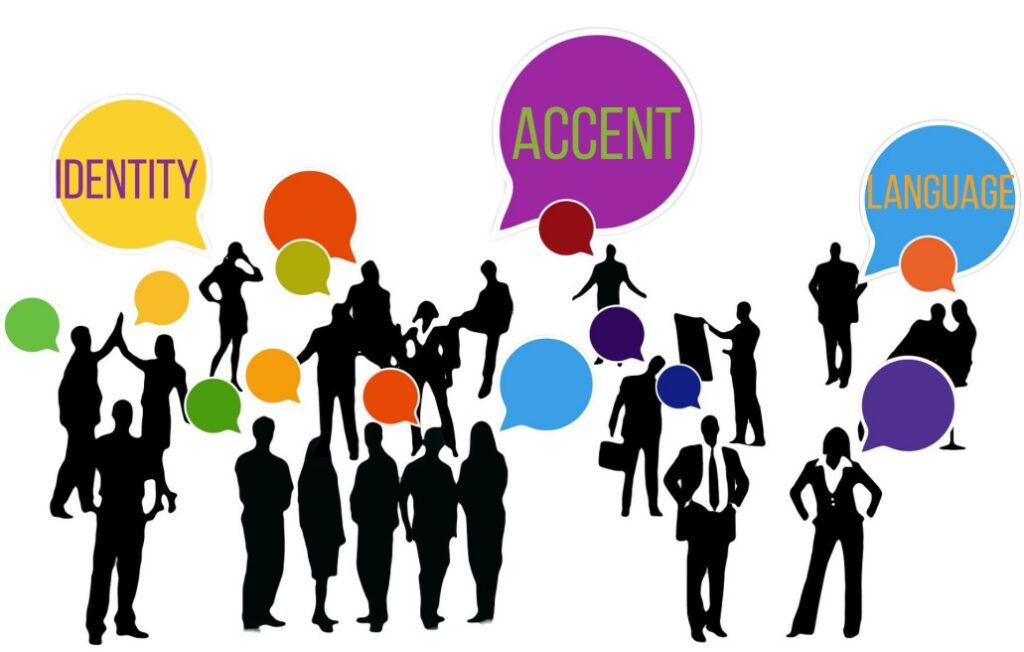
These conversations present themselves as practical, even benevolent. We are just trying to help people succeed. But sociology of language asks: succeed in whose terms? Conform to whose standards? And what is lost when we demand linguistic assimilation as the price of entry? Identity also runs through everything in this field. Language choices signal who we are and who we want to be recognized as.
When immigrant families maintain their heritage language across generations, despite relentless pressure to abandon it, that is not sentimentality. That is a social act with political meaning. When minority communities demand language rights, recognition, and resources for their languages, they are not asking for translation assistance.
They are demanding that their existence be acknowledged on their own terms. I do not hear everyday language used the same way anymore. I hear a stranger code-switch between dialects on a phone call and recognize the social navigation happening in real time.
I read a job description requiring “excellent written and verbal communication skills” and wonder which applicants will read that and know, without anyone saying it, that their way of speaking does not qualify. I watch politicians deliver speeches in languages they barely speak during campaign season and recognize the symbolic work being performed.
Sociology of language taught me that language is not separate from society. It is not a tool we pick up and set down. It is society, made audible. It is a hierarchy, naturalized into vocabulary. It is identity, spoken into existence sentence by sentence. And that is why the distinction I stumbled through that day in the conference hallway actually matters. Calling everything sociolinguistics does not just blur academic boundaries.
It obscures what is most urgent about studying language in the first place. Not the sounds. Not the sentence structures. But what we do to each other with words. And what words do to us in return.
References
Wikipedia. (2025). Sociology of Language. https://en.wikipedia.org/wiki/Sociology_of_language
Springer Nature Link. Sociology of Language. https://link.springer.com/chapter/10.1007/978-94-011-4535-0_1
EBSCO Research Starters. Sociolinguistics. Language and Linguistics. https://www.ebsco.com/research-starters/language-and-linguistics/sociolinguistics-0
Humanities and Social Sciences Communications. (2023). Changing perceptions of language in sociolinguistics. https://www.nature.com/articles/s41599-023-01574-5