

 Posted by
 Explore how the gig economy reshaped work, labor relations, and job security. A sociological look at flexibility, precarity, and power in platform-based employment. Most of us pictured traditional office jobs, maybe with fancier computers.
Nobody really imagined that millions of people would be driving strangers around in their personal cars or renting out their spare bedrooms as a primary source of income. Yet here we are, living in what sociologists call the gig economy. Honestly, it has fundamentally changed everything we thought we knew about employment, labor relations, and what it even means to have a job.
The gig economy represents more than just a trendy way to make money on the side. It has become a massive shift in how society organizes work itself. When I first started freelancing three years ago, I did not realize I was becoming part of a larger sociological phenomenon that scholars have been studying intensely. I just needed flexible work that fit around my other commitments. But that personal choice connected me to millions of other workers who were also navigating this new terrain where the boundaries between employment and unemployment have become frustratingly blurry.
Traditional employment used to come with certain expectations that felt almost sacred. You showed up to a workplace, you worked set hours, you received benefits, and you had at least some job security. The relationship between employer and employee was regulated, protected by labor laws that took decades to establish. My grandfather worked at the same manufacturing plant for thirty-five years. He knew his schedule months in advance, he had health insurance, and he eventually retired with a pension. That world feels almost quaintlike now, does it not?
The rise of platform-based work has dismantled many of those expectations. Companies like Uber, TaskRabbit, Fiverr, and DoorDash have created what they call opportunities for independent contractors. Workers get flexibility and autonomy, which sounds appealing on the surface. I appreciated being able to work from my apartment at two in the morning if I wanted to.
But sociologists point out that this flexibility often comes at a significant cost. Gig workers typically lack health insurance, paid leave, retirement benefits, and protection from arbitrary termination. We have traded security for flexibility, and the question becomes whether that trade was truly voluntary or simply necessary in an economy that no longer offers traditional alternatives to everyone.
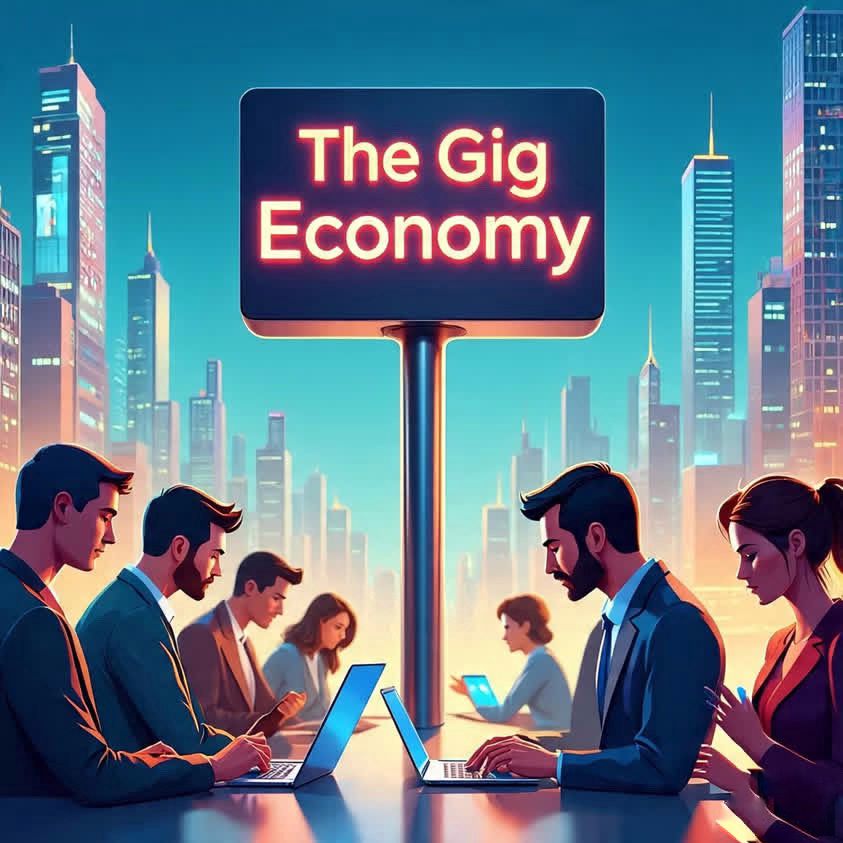
What fascinates me from a sociological perspective is how the gig economy has redefined the very nature of the employment relationship. Karl Marx talked about alienation in the workplace, but gig work introduces new forms of disconnection. When you work through an app, you rarely interact with actual humans who represent your employer.
Algorithms assign you tasks, rate your performance, and can deactivate your account without explanation. I once had a friend who lost access to her primary income source when a rideshare platform suspended her account due to a passenger complaint that she never got to dispute properly. The facelessness of algorithmic management creates a strange kind of powerlessness.
The sociology of work has always examined power dynamics between employers and employees, and the gig economy reveals these dynamics in stark new ways. Traditional workers could unionize, collectively bargain, and push for better conditions.
Gig workers operate in isolation, competing against each other for tasks and ratings. When everyone is an independent contractor, solidarity becomes nearly impossible to build. Sure, there have been some organizing efforts among food delivery workers and rideshare drivers, but the structure of gig work actively discourages collective action. You are not coworkers with other gig workers. You are competitors.
Economic precarity has become normalized in ways that would have shocked previous generations. Young people especially have grown up watching stable careers disappear and have adapted by cobbling together multiple income streams.
I know people who drive for Lyft in the mornings, do graphic design in the afternoons, and walk dogs in the evenings. Is that entrepreneurship or is that just survival? Sociologists debate whether gig work represents liberation from corporate constraints or a disturbing regression to pre-industrial forms of labor where workers constantly hustled without security.
Race, class, and gender dynamics also play crucial roles in who ends up doing gig work and under what conditions. Women often dominate certain platforms while men dominate others. Immigrants and people of color make up disproportionate numbers of delivery and rideshare workers. The gig economy has not created equality. It has often reproduced existing inequalities in new digital packagin.
Reference
American Sociological Association. (2019). The future of work: Gig economy and labor relations. ASA Publications.
Bureau of Labor Statistics. (2024, November 8). Contingent and alternative employment arrangements—July 2023 (USDL-24-2267). https://www.bls.gov/news.release/conemp.nr0.htm
Bureau of Labor Statistics, U.S. Department of Labor. (2024). Electronically mediated employment: Characteristics of workers in the gig economy. Monthly Labor Review.