
 Posted by
 Discover how transportation shapes class, race, and access to opportunity in this personal look at the sociology behind roads, transit, and mobility. I used to think transportation was just a logistics problem. Point A to point B, figure out the fastest route, done. Then I spent three months without a car after mine finally gave out on a highway shoulder in July, and I learned something that I probably should have known all along: how we move through a city says almost everything about who gets to belong in it.
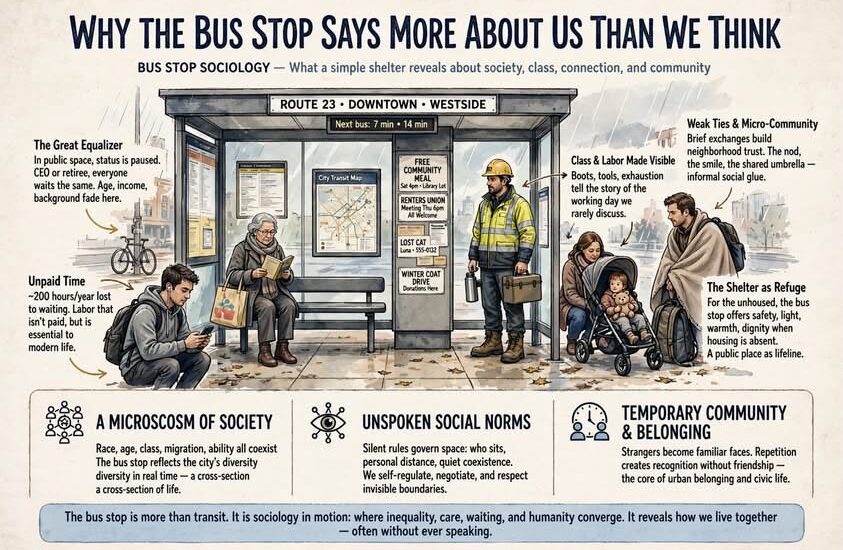
Sociology of transportation is not exactly a phrase you hear at dinner parties. But once you start paying attention to it, you cannot stop noticing it everywhere. Who is waiting at the bus stop at six in the morning? Who is driving alone in a car that costs more than most people make in a year? Who has never once had to think about whether the sidewalk near their apartment is actually safe to walk on at night? These are not neutral facts. They are the result of decades of decisions about transportation infrastructure, and those decisions were rarely made with everyone in mind.
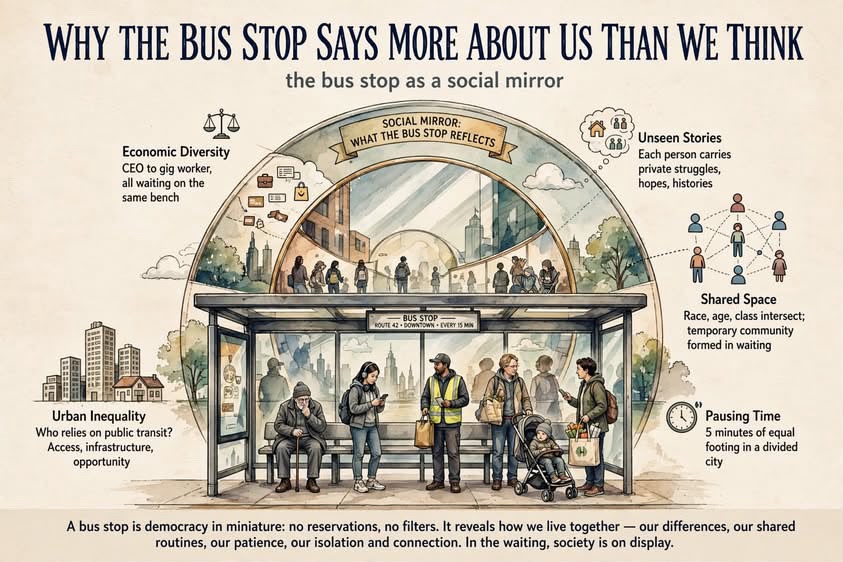
Let me back up a little. When sociologists talk about mobility, they do not just mean the physical act of getting somewhere. Mobility is tangled up with class, race, gender, and access to opportunity in ways that are honestly kind of uncomfortable to sit with once you notice them. A person without reliable transportation is not just inconvenienced. They are often cut off from better jobs, from healthcare, from grocery stores that sell something other than gas station snacks. I remember standing at a bus stop in the rain, watching my scheduled bus get replaced by one that would not arrive for another forty minutes, and thinking about how this single gap in a transit schedule could be the difference between someone keeping a job or losing it.
Public transit systems were never built in a vacuum. Urban planning history is full of moments where highways were routed directly through Black neighborhoods, splitting communities in half and slashing property values overnight. This was not an accident. It was policy, dressed up as progress. If you want to understand the sociology of transportation, you kind of have to start here, with the recognition that roads and rail lines are not just concrete and steel. They are social contracts, written by people who often did not live anywhere near the communities they were reshaping.
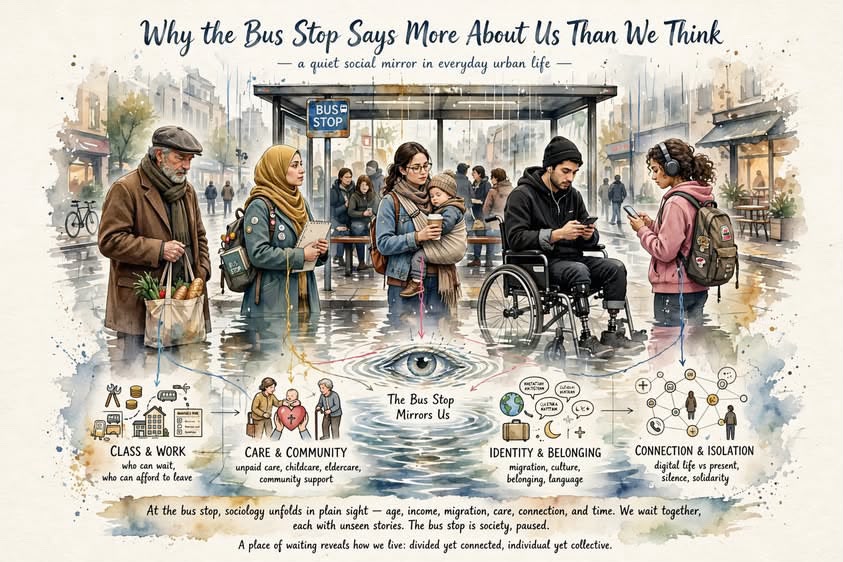
And can we talk about cars for a second? The private automobile is one of the strangest cultural objects we have. It is marketed as freedom, independence, the open road, all that. But for a huge portion of the population, car ownership is less about freedom and more about survival. If public transit does not reach your job, you need a car whether you want one or not. That is a kind of forced choice disguised as a lifestyle preference, and I think we do not talk about that enough. Car dependency is not really a personal failing. It is a structural outcome of decades of zoning laws and suburban sprawl that made walkable, transit friendly neighborhoods increasingly rare.
There is also a gendered dimension to all of this that I did not fully appreciate until I started reading about it. Women, especially women with caregiving responsibilities, tend to have what researchers call trip chaining. Drop a kid at school, stop by the pharmacy, get groceries, pick the kid up again. Transportation systems designed around a simple commute from home to work and back do not account for this pattern very well, which means the people doing the most complicated navigating through a city are often the ones least served by how that city was designed.
I keep coming back to my own three car-less months, honestly. It changed how I saw my own neighborhood. Walking to the store instead of driving meant I actually noticed things, the cracked sidewalk outside the elementary school, the total absence of a crosswalk at a pretty dangerous intersection, the way certain streets had beautiful new bike lanes while others a few blocks over did not have a sidewalk at all. None of this was random. Transportation equity, or the lack of it, was written right into the pavement.So where does that leave us? I do not think the answer is that everyone needs to give up their car tomorrow, and I am not interested in being preachy about it.
But I do think the sociology of transportation forces us to ask better questions about the cities we build and who they are actually built for. Every transit schedule, every highway route, every sidewalk that ends abruptly in the middle of nowhere reflects a choice somebody made. Understanding those choices, and who they served, feels like a pretty good place to start if we actually want to build something more fair.
Next time you are waiting for a bus, or stuck in traffic, or just walking somewhere because you have no other option, it might be worth asking yourself who this particular path was designed for. I promise once you start asking that question, you will not stop.
Reference
Archer, D. N. (2020). “White men’s roads through Black men’s homes”: Advancing racial equity through highway reconstruction. Vanderbilt Law Review, 73, 1259–1292.
Archer, D. N. (2021). Transportation policy and the underdevelopment of Black communities. Iowa Law Review, 106, 2125–2150.
Karner, A., London, J., Rowangould, D., & Manaugh, K. (2020). From transportation equity to transportation justice: Within, through, and beyond the state. Journal of Planning Literature. https://doi.org/10.1177/0885412220901937